A water loss representing as little as 5% of total body mass causes an immediate plunge in a canine’s Glomerular Filtration Rate (GFR), severely obstructing the clearance of cellular metabolic waste. Because domestic dogs possess virtually no functional apocrine sweat glands over their bodies, their thermal regulation relies almost exclusively on respiratory evaporation through panting. Consequently, even mild hypovolemia triggers systemic cellular fluid contraction and electrolyte disturbances at a velocity far exceeding that of humans.
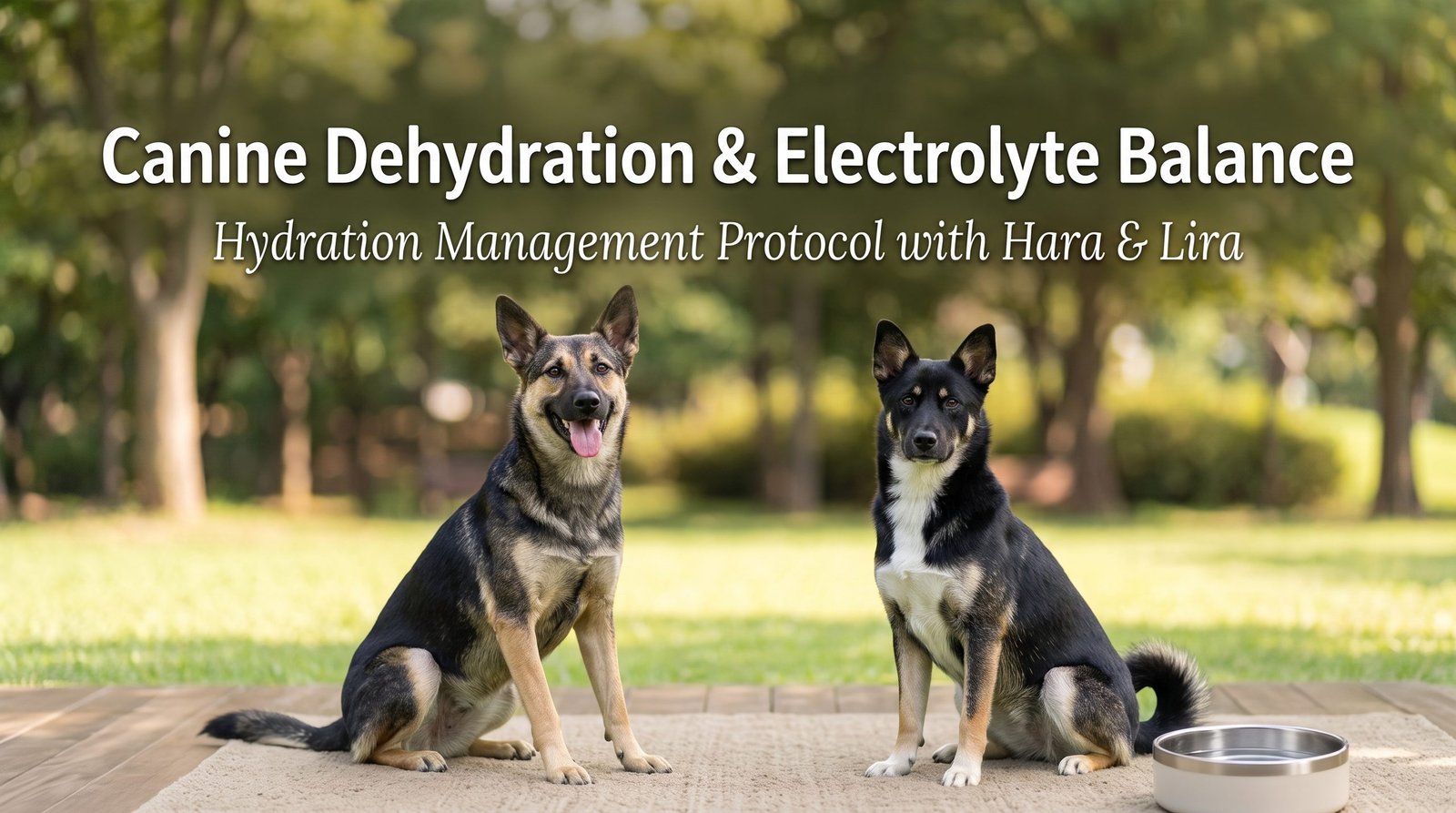
Managing Hara—a powerful German Shepherd mix with high metabolic heat dissipation—alongside Lira—a high-torque, agile mixed breed with intense kinetic expenditure—revealed that simply setting out a passive water bowl fails to prevent subclinical dehydration. Grounded in veterinary fluid physiology, this guide delivers an evidence-based clinical self-examination framework and a 4-step hydration protocol engineered to maintain systemic osmotic equilibrium.
Canine Fluid Biomechanics and Pathophysiological Risks of Dehydration
Total body water accounts for approximately 60% to 70% of an adult canine’s physical mass. This fluid is compartmentalized into Intracellular Fluid (ICF, ~40%) and Extracellular Fluid (ECF, ~20%), operating under strict hydrostatic and oncotic pressures.
1. Renal Hypoperfusion and Prerenal Azotemia
When vascular volume drops, homeostatic mechanisms induce peripheral vasoconstriction to maintain central mean arterial pressure, drastically diverting blood flow away from the renal parenchyma. Sustained hypoperfusion deprives nephron tubules of cellular oxygenation, culminating in ischemic acute tubular necrosis and sudden spikes in Blood Urea Nitrogen (BUN) and serum creatinine.
2. Hemoconcentration and Microcirculatory Collapse
Fluid depletion precipitates severe hemoconcentration, elevated Packed Cell Volume (PCV/Hematocrit), and increased blood viscosity. Sluggish microvascular capillary perfusion degrades tissue oxygen delivery, forcing the myocardium to generate excessive contractile force to sustain cardiac output against heightened peripheral resistance.
30-Second Clinical Triage: Hands-On Canine Dehydration Test & Signs
Guardians can evaluate hemodynamic stability and hydration levels accurately at home utilizing three standard physical diagnostic metrics.
1. The Interscapular Skin Turgor Test
Gently grasp the loose cutaneous fold between the dog’s scapulae (shoulder blades), elevate it vertically 2 to 3 centimeters, and release cleanly.
- Optimal Hydration: Skin snaps back into a flat position in under 1 second.
- Mild to Moderate Deficit (5–7% loss): Skin fold recedes sluggishly over 2 to 3 seconds, leaving a residual tent.
- Severe Dehydration (8–10%+ loss): Skin remains rigid in a tented configuration for over 4 seconds, indicating loss of subcutaneous interstitial fluid. Immediate emergency IV fluid therapy is required.
2. Capillary Refill Time (CRT) and Gingival Moisture
Elevate the upper lip and apply moderate thumb pressure to the non-pigmented mucosal surface of the gums for 2 seconds, then observe the blanching recovery.
- Mucosa must return to baseline salmon-pink within 1.5 seconds.
- A refill exceeding 2.0 seconds, combined with tacky, ropey saliva or dry, parched mucosal tissue, signals compensatory peripheral vasoconstriction and severe circulating volume collapse.
Dehydration Severity Matrix and Clinical Intervention Triage
| Dehydration Deficit | Clinical Presentation | Mucosa & Vital Biomarkers | Actionable Medical Triage |
| < 5% (Subclinical) | No visible distress, slight behavioral lethargy | Moist gums, CRT < 1.5s, instantaneous skin snapback | Refresh water bowls, introduce wet food toppers |
| 5% – 7% (Mild) | Slower mobility, mild anorexia, frequent yawning | Tacky gums, skin tenting holds for 2–3 seconds | Administer balanced oral electrolyte broths in divided doses |
| 8% – 10% (Moderate) | Enophthalmos (sunken eyes), dry nasal planum, tachycardia | Delayed CRT (2–3s), distinct cutaneous tenting | Veterinary admission mandatory; SC or IV isotonic fluid |
| > 10% – 12% (Severe/Critical) | Lateral recumbency, hypothermic extremities, thready pulses | Pallid gums, CRT > 3s, comatose shock indicators | Acute hypovolemic shock; immediate intensive ICU care |
The 4-Step Hydration Optimization Routine Applied for Hara & Lira
Relying solely on tap water intake frequently leads to voluntary water avoidance. Tailored to dynamic kinetic exertion, here is the clinical protocol designed to optimize cellular bioavailability.
1. Strict Target Intake Calculation
The non-negotiable baseline daily water volume for canines is 50 to 60 ml per kilogram of body mass:
- Hara (25 kg baseline): Minimum 1,250 ml – 1,500 ml daily
- Lira (15 kg baseline): Minimum 750 ml – 900 ml daily
- Multiply this baseline by 1.5 during periods of elevated ambient temperatures or post-exercise exertion.
2. Stimulating SGLT-1 Transporters via Unsalted Bone Broth
Dosing pure distilled water excessively can paradoxically dilute plasma osmolality, shutting down Antidiuretic Hormone (ADH) release and accelerating renal free-water excretion—an occurrence known as voluntary dehydration.
Tip: Formulate an unsalted, allium-free bone broth simmered for 8+ hours, and dilute it 1:3 with pure filtered water. Natural glycine, potassium, and minimal sodium activate intestinal Sodium-Glucose Cotransporters (SGLT-1), expediting passive water absorption across the enterocyte barrier by over 300%.
3. Eliminating Bacterial Micro-Fouling
Porous plastic bowls harbor microbial biofilms and trace chemical odours that activate the canine vomeronasal avoidance response. Transition exclusively to surgical-grade 304 stainless steel or glazed ceramic bowls. Distribute three dedicated hydration stations along the dogs’ main living pathways to eliminate territorial access barriers.
Frequently Asked Questions (FAQ)
Q1. Can I administer commercial human sports drinks (like Gatorade or Pocari Sweat) to a dehydrated dog?
A1. Never administer undiluted human electrolyte beverages. Formulated to replace human sweat losses, these drinks contain excessive sodium and concentrated refined carbohydrates that trigger osmotic secretory diarrhea in canines, drastically compounding interstitial dehydration. In absolute wilderness emergencies where canine-specific oral electrolyte solutions are unavailable, a temporary 1:4 dilution with clean water may be given in small sips under veterinary guidance until formal treatment is secured.
Q2. Is excessive, unquenchable water consumption also indicative of underlying disease?
A2. Yes. Ingesting over 100 ml/kg/day constitutes clinical polydipsia and is typically paired with polyuria (PUPD). This is a hallmark symptom of severe endocrine or renal breakdown, including Cushing’s disease (hyperadrenocorticism), Diabetes Mellitus, or Chronic Kidney Disease (CKD). If your dog suddenly doubles their baseline water consumption, arrange an immediate serum biochemistry profile and urinalysis to check specific gravity.
Conclusion: Proactive Hydration Audits Preserve Organ Longevity
Dehydration operates as an insidious organ stressor that remains subclinical until structural compensatory thresholds fail. Hara and Lira maintain pristine athletic vigor and stamina because their hydration relies on systematic weight-based targets and bioavailable electrolyte broths rather than passive assumptions. Lift your dog’s lip right now, check the mucosal hydration of their gums, and implement calibrated fluid management into your daily routine.
Meta Description: Master canine dehydration diagnostics and electrolyte optimization. From skin turgor and CRT tests to Hara & Lira’s proven bone broth rehydration protocol.
Veterinary Disclaimer: The physiological data and hydration protocols published on Hearth & Paw Lab are provided strictly for educational and preventative reference. They do not constitute formal veterinary medical advice, diagnosis, or emergency triage. If your dog exhibits signs of moderate to severe hypovolemic dehydration (sunken eyes, prolonged skin tenting, pale gums), transport them immediately to an emergency veterinary clinic for professional intravenous fluid therapy.