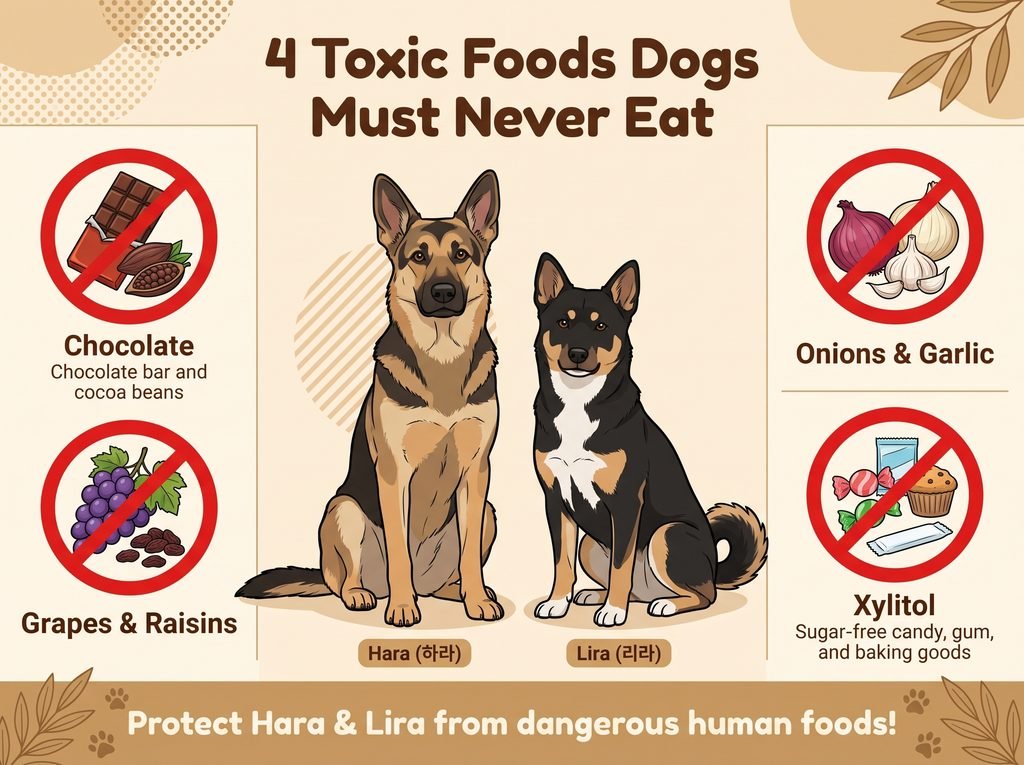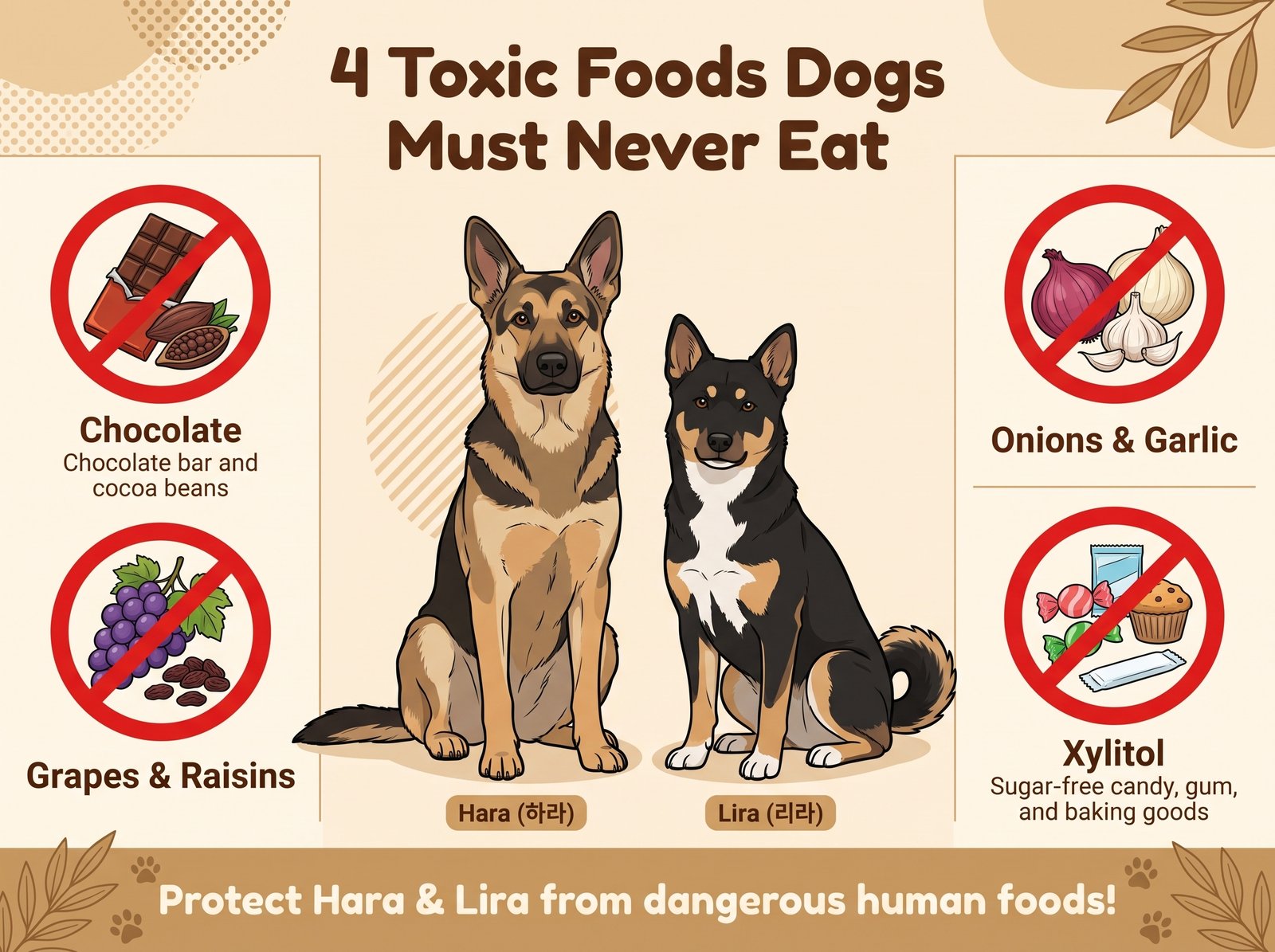
While sharing food with our canine companions is a common way to bond, understanding the most dangerous toxic foods for dogs is essential for preventing sudden veterinary emergencies. Many human foods contain chemical compounds that dogs are metabolically unable to process, leading to acute organ failure or even fatality. Because dogs possess fundamentally different digestive enzymes and clearance rates than humans, even trace amounts can be lethal.
A significant proportion of veterinary emergency admissions are caused by accidental ingestion of toxic household foods. To safeguard the longevity and well-being of dogs like our cherished Hara and Lira, here is a comprehensive veterinary overview of the Top 4 Toxic Foods, their physiological effects, and emergency action protocols.
1. The Top 4 Most Toxic Foods for Dogs
Below is a breakdown of the chemical toxicities, target organs, and clinical signs of the four most hazardous human foods for canines.
| Toxic Food | Active Toxin | Target System & Pathology | Key Clinical Signs |
| Chocolate | Theobromine, Caffeine | Central Nervous & Cardiovascular | Tachycardia, muscle tremors, seizures, hyperthermia |
| Grapes & Raisins | Tartaric Acid (suspected) | Renal system (Tubular necrosis) | Vomiting, anuria, acute kidney injury |
| Onions & Garlic | Thiosulfate | Red Blood Cells (Oxidative stress) | Hemolytic anemia, dark red urine, lethargy |
| Xylitol | Sugar alcohol compound | Pancreas & Hepatic cells | Severe hypoglycemia, acute hepatic necrosis |
① Chocolate: Cardiovascular and Neurological Toxicity
Chocolate contains methylxanthines, primarily theobromine and caffeine. While humans rapidly process theobromine, dogs eliminate it at an extremely sluggish rate (half-life of approximately 17.5 hours), causing toxic accumulation.
- Why It’s Deadly: It overstimulates the central nervous system and causes vasoconstriction and cardiac arrhythmias. Dark chocolate and cocoa powder are exceptionally hazardous; as little as 15–20 grams can be toxic to medium-sized dogs.
- Symptoms: Restlessness, profuse vomiting, diarrhea, rapid breathing, elevated heart rate, muscle rigidity, and life-threatening seizures within 6 to 12 hours.
② Grapes and Raisins: Acute Renal Failure
Grapes and raisins represent an idiosyncratic poison: ingestion of even minute quantities can induce irreversible organ damage. Recent veterinary toxicology research pinpoints tartaric acid as the primary driver behind renal tubular epithelial necrosis.
- Why It’s Deadly: Causes sudden Acute Kidney Injury (AKI). Raisins are dehydrated, meaning the toxic components are significantly more concentrated.
- Symptoms: Nausea and vomiting within 2 to 6 hours, followed by lethargy, dehydration, and eventual cessation of urine production (anuria) within 24 to 48 hours.
③ Onions and Garlic: Red Blood Cell Breakdown
All members of the Allium family contain thiosulfates, which resist degradation even under high cooking heat, dehydration, or processing. Soups, broths, and seasonings containing powdered onion/garlic are equally lethal.
- Why It’s Deadly: Induces oxidative damage to hemoglobin, producing Heinz body hemolytic anemia. As red blood cells burst, systemic oxygen delivery fails.
- Symptoms: Clinical signs often present late (2 to 5 days post-ingestion). Watch for pale or jaundiced gums, brown/reddish urine, extreme fatigue, and elevated respiratory effort.
④ Xylitol: Severe Hypoglycemia and Liver Failure
Widely used as an artificial sweetener in sugar-free gums, baked goods, peanut butter, and mints, xylitol triggers an aggressive response in dogs.
- Why It’s Deadly: The canine pancreas mistakes xylitol for glucose, dumping massive quantities of insulin into the bloodstream. This leads to profound hypoglycemic shock within minutes and dose-dependent acute liver failure within 1 to 3 days.
- Symptoms: Sudden weakness, ataxia (staggering gait), vomiting, collapses, and seizures occurring within 15 to 30 minutes of consumption.
2. Emergency Response Protocol for Pet Owners
If you discover your pet has ingested any prohibited substance, quick and disciplined intervention is paramount.
Step 1: Collect Ingestion Details
Immediately record the exact ingredient name, estimated amount ingested, and the precise timeframe. Keep the original product packaging or ingredient list to assist veterinary diagnostics.
Step 2: Contact Emergency Clinic & Transport
⚠️ Caution: Never Induce Vomiting at Home Without Veterinary Approval.
Administering salt or hydrogen peroxide can lead to chemical aspiration pneumonia, severe gastrointestinal ulceration, or hypernatremic encephalopathy. Call your nearest veterinary emergency hospital immediately and transport your dog within the critical 2-hour window for safe, professional emesis and supportive fluid therapy.
3. Preventive Measures for a Safe Household
Accidents occur in seconds. Creating a dog-proof home environment is the only reliable preventative measure.
- Clear Kitchen Counters: Never leave food or groceries unattended on surfaces; store all human food securely in closed overhead cabinets or the refrigerator.
- Secure Trash Cans: Use trash bins equipped with pedal locks or secure lids to prevent scent-driven scavenging.
- Set Rules for Guests: Inform visitors and children that sharing human food or snacks from the table is strictly prohibited.
- Reinforce “Leave It” Training: Practice impulse control commands with high-value treats so your dog halts immediately when something falls to the floor.
Frequently Asked Questions (FAQ)
Q1. My 15kg dog ate just one grape. Is medical attention really necessary?
A. Yes, immediate veterinary evaluation is recommended. Canine grape toxicity is not strictly dose-dependent; individual sensitivity varies wildly, and single-grape ingestions have triggered acute kidney failure in clinical records.
Q2. My dog ingested garlic seasoning 12 hours ago and seems active. Are they out of danger?
A. No. Heinz body hemolytic anemia is an insidious condition that takes several days to peak. Internal red blood cell destruction occurs before visible lethargy or pale gums appear. Blood tests are vital to monitor hematocrit levels.
Conclusion & Action Steps
Dogs cannot differentiate between nourishing food and toxic substances; they simply follow scent and curiosity. As pet owners, providing a protected environment through vigilant food safety is the cornerstone of responsible care. Take a moment today to inspect your pantry and counters so companions like Hara and Lira can live vibrant, healthy lives by your side.
- Meta Description: Learn the top 4 toxic foods dogs must never eat (chocolate, grapes, onions, xylitol), clinical signs of poisoning, and critical veterinary emergency protocols.