Veterinary Medical Disclaimer: This guide is based on hands-on canine handling experience and established veterinary triage principles. It is designed for educational purposes only. If your dog exhibits signs of acute pain, uncontrollable head shaking, or bleeding, contact a licensed veterinarian immediately.
When an upright dog ear droops on walk outings, it demands immediate attention from the handler. A dog’s ear is an intricate sensory organ controlled by more than 18 specialized muscles. While an asymmetrical posture can occasionally reflect focused acoustic tracking, an unexpected change mid-walk is overwhelmingly a physical distress signal.
From microscopic grass awns (foxtails) drilling into the ear canal to insect stings or acute infections, understanding what is happening within that canal can prevent severe complications such as a ruptured eardrum or an aural hematoma.
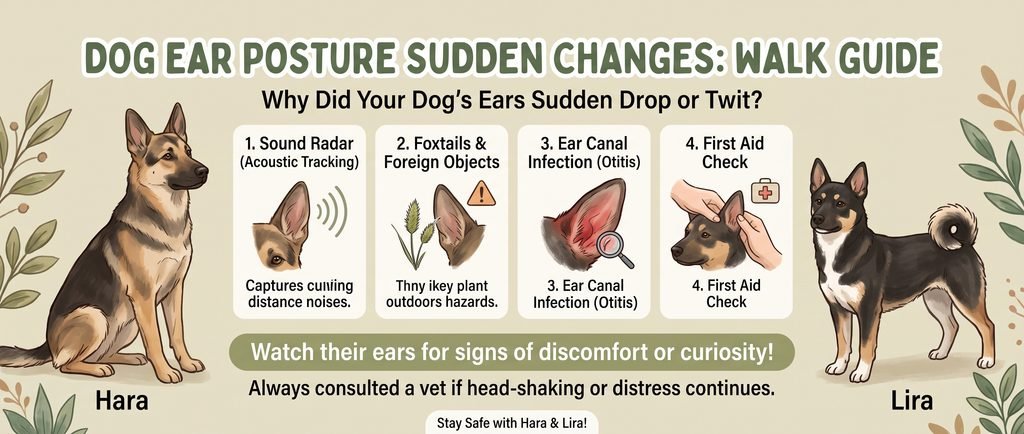
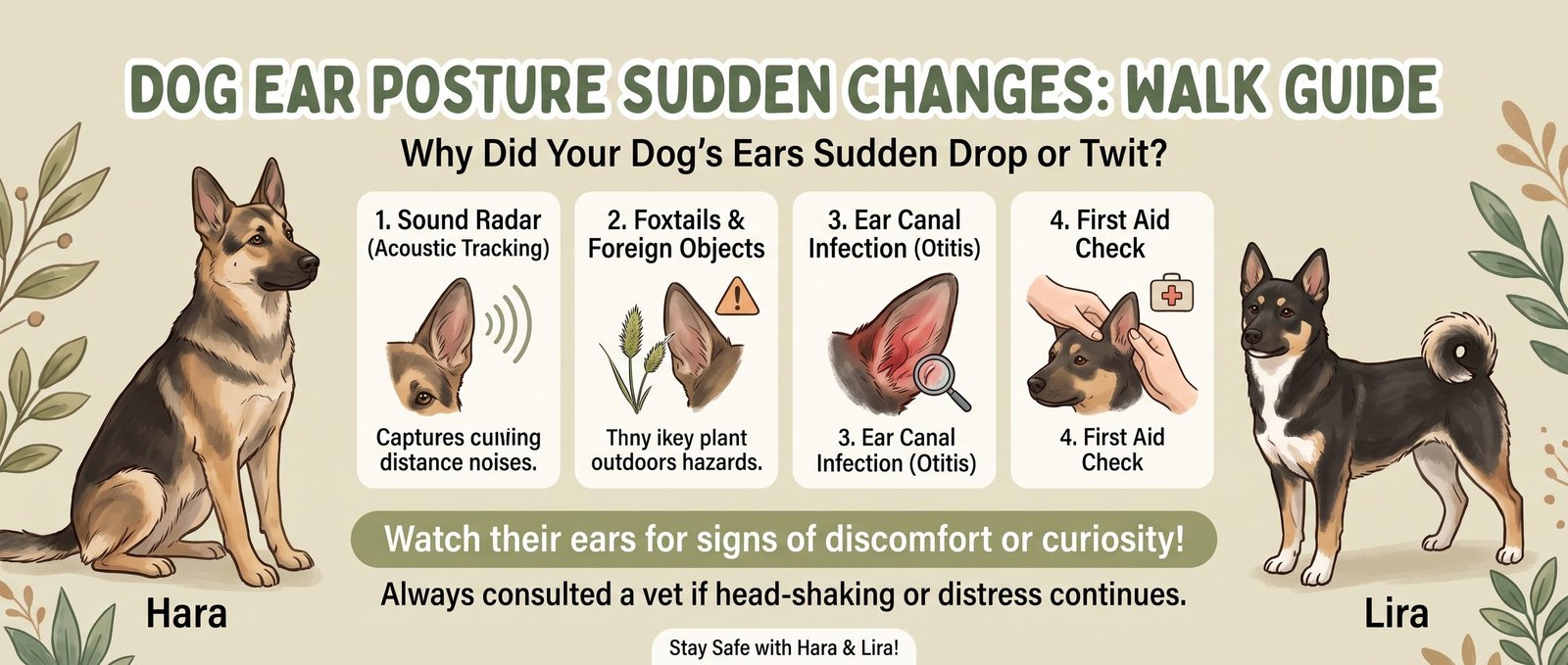
Drawing from extensive field management with two distinct ear anatomies—Hara, a German Shepherd mix with broad, erect ears susceptible to airborne debris, and Lira, a low-profile mixed breed prone to diving snout-first into brush—this guide outlines how to assess the root cause and execute proper field triage.
5 Critical Reasons a Dog Ear Droops on Walk Trails
Dogs rotate their pinnae (ear flaps) up to 180 degrees independently to pinpoint sounds. However, an ear that remains trapped in a lowered, pinned, or tilted position signifies an underlying physical disruption.
| Suspected Cause | Clinical & Behavioral Signs | Urgency Level | Immediate Action |
| Acoustic Focus (Normal) | One ear swivels forward, body freezes briefly, eyes locked | None | Allow the dog to scan; posture resets naturally |
| Foxtail / Grass Awn | Instant violent head shaking, ear pinned flat, ground pawing | Emergency | Halt walk; prevent scratching; seek veterinary otoscopy |
| Insect Bite / Bee Sting | Localized heat, rapid swelling of pinna, sudden yelping | Moderate to High | Apply cool compress; monitor breathing for allergic shock |
| Acute Otitis Externa | Dark waxy discharge, yeasty/pungent odor, inner ear redness | Needs Evaluation | Schedule clinical exam; do not use home drops |
| Developing Hematoma | Thick, fluid-filled swelling across the ear flap cartilage | Urgent | Cushion ears to stop flap trauma; visit clinic |
1. Acoustic Localization vs. Distress
When pinpointing faint rustling or subterranean movement, a dog swivels one ear toward the frequency while maintaining neutral tension in the other. Once the stimulus dissipates, the ear snaps back to its baseline posture. If the ear remains dropped for longer than two minutes, acoustic focus is ruled out.
2. The Foxtail Hazard (Grass Awn Penetration)
From late spring through late autumn, dried grass awns (commonly foxtails) are one of the most dangerous hazards on walking trails. These plant structures feature microscopic, backward-facing barbs that permit travel in only one direction: forward.
Because canine ear canals form an anatomical “L” shape (descending vertically before turning horizontally toward the eardrum), an awn that slips into the canal becomes trapped. When the dog shakes its head in response to irritation, the barbs ratchet deeper down the canal, risking perforation of the tympanic membrane.
3. Insect Stings and Parasitic Infiltration
A black fly bite, mosquito cluster, or bee sting on the thin, highly vascular margins of the pinna causes instant, sharp pain. Dogs respond by clamping the affected ear down against the skull to guard the injured tissue.
The 60-Second Field Diagnostic Checklist
If an ear drops or tilts unexpectedly mid-stride, halt your walk immediately, secure the leash, and complete this four-point assessment:
- Head Shaking Frequency: Is the dog flicking or whipping its head more than twice in a 30-second window?
- Mechanical Pawing: Are the hind legs aggressively scratching at the base of the skull, or is the dog rubbing its face along the grass?
- Visual Pinna Inspection: Gently lift the ear flap. Look for localized erythema (redness), black discharge, or physical grass seeds lodged along the outer cartilage folds.
- Base Palpation Response: Lightly compress the cartilaginous base of the ear canal. If the dog winces, pulls away, whimpers, or displays defensive posture, active inflammation or deep canal irritation is present.
Field Warning: Never probe your dog’s ear with fingers, keys, or cotton swabs while outside. A sudden jerk can drive a foreign body directly through the eardrum, causing irreversible damage and deep vestibular trauma.
3-Step Field Protocol: Safe Handling & Triage
During an outdoor incident where a grass awn entered Lira’s ear canal, immediate de-escalation prevented severe inner canal tearing. Follow these field-tested steps:
Step 1: Secure the Leash and Stop Physical Movement
A dog experiencing acute ear discomfort will often panic, potentially bolting toward traffic or frantically rubbing its head against rough gravel. Shorten the leash to a heel position, move away from tall vegetation, and maintain a calm, quiet demeanor to reduce heart rate and adrenaline.
Step 2: Prevent Secondary Aural Hematomas
Violent, unchecked head shaking forces heavy ear flaps to slap against the skull with significant impact. This blunt trauma easily shears the delicate blood vessels between the skin and cartilage, causing the pinna to fill with blood (an aural hematoma) within hours.
- If you carry an emergency bandana or snood, wrap it gently over the crown of the head to secure the flaps flat against the neck without constricting the airway.
Step 3: Avoid Home Cleansers; Proceed to Professional Otoscopy
Do not pour water, hydrogen peroxide, or over-the-counter ear cleaners into the ear canal.
If an organic awn is present, moisture causes the seed to expand, wedging it tighter into the canal wall. Furthermore, if the eardrum is compromised, liquid cleansers can flow directly into the middle and inner ear, resulting in chemical ototoxicity, severe loss of balance, or facial nerve paralysis. Transport the dog directly to an emergency clinic equipped with an illuminated otoscope and alligator forceps.
Frequently Asked Questions (FAQ)
Can I remove a visible grass seed from my dog’s ear myself?
Only remove a plant awn if it is resting on the loose fur of the external ear flap and can be plucked without resistance. If any portion of the awn has slipped down into the vertical canal opening, do not attempt extraction. Household tweezers can snap the seed or push it deeper down the L-shaped tract.
Why does my dog keep tilting their head even when no debris is visible?
A persistent head tilt—where one ear stays lower than the other—indicates deep irritation, fluid accumulation in the middle ear, or a disturbance in the canine vestibular system. If head tilting lasts beyond an hour, an in-depth veterinary examination is essential.
Can an ear infection appear suddenly during a single walk?
While otitis externa typically develops over several days, outdoor factors like humidity, windborne dust, or a minor scratch can trigger acute flare-ups of pre-existing, low-grade yeast or bacterial infections, causing immediate discomfort.
Prevention: Keeping Walking Trails Safe
A sudden change in your dog’s ear posture is a clear physical indicator of distress that should never be ignored. To minimize outdoor risks:
- Avoid walking through overgrown brush, dry rye grass, or unmaintained fields between late spring and autumn.
- Perform a hands-on physical check of the ear flaps and canal openings immediately following every trail hike.
- For dogs with upright ears like German Shepherds, wipe away airborne dust around the ear margins with a dry microfiber cloth after windy walks.
By responding decisively at the first sign of an ear drop, you protect your dog from invasive foreign bodies, avoid costly surgical hematoma drainage, and ensure every walk remains safe and pain-free.