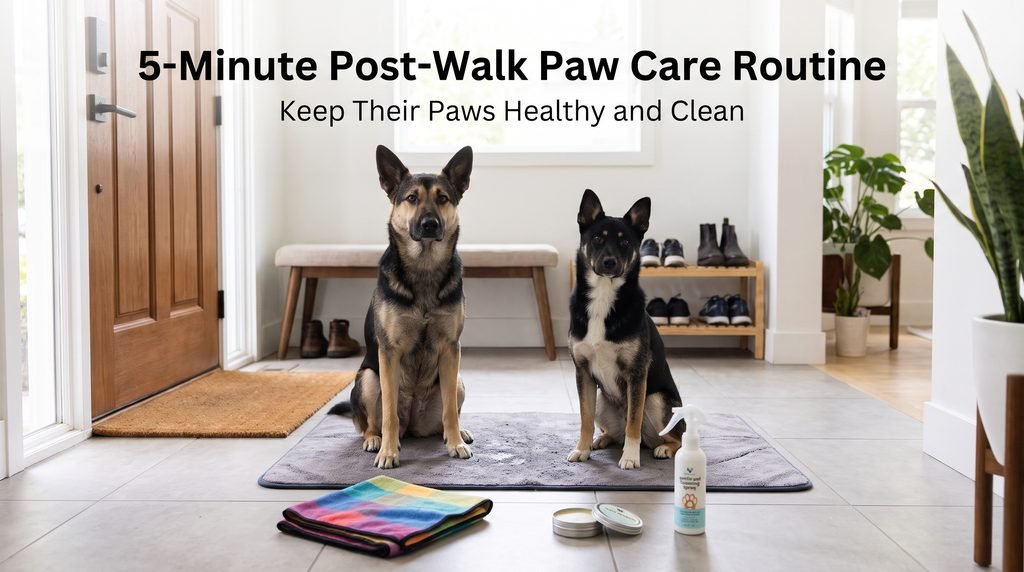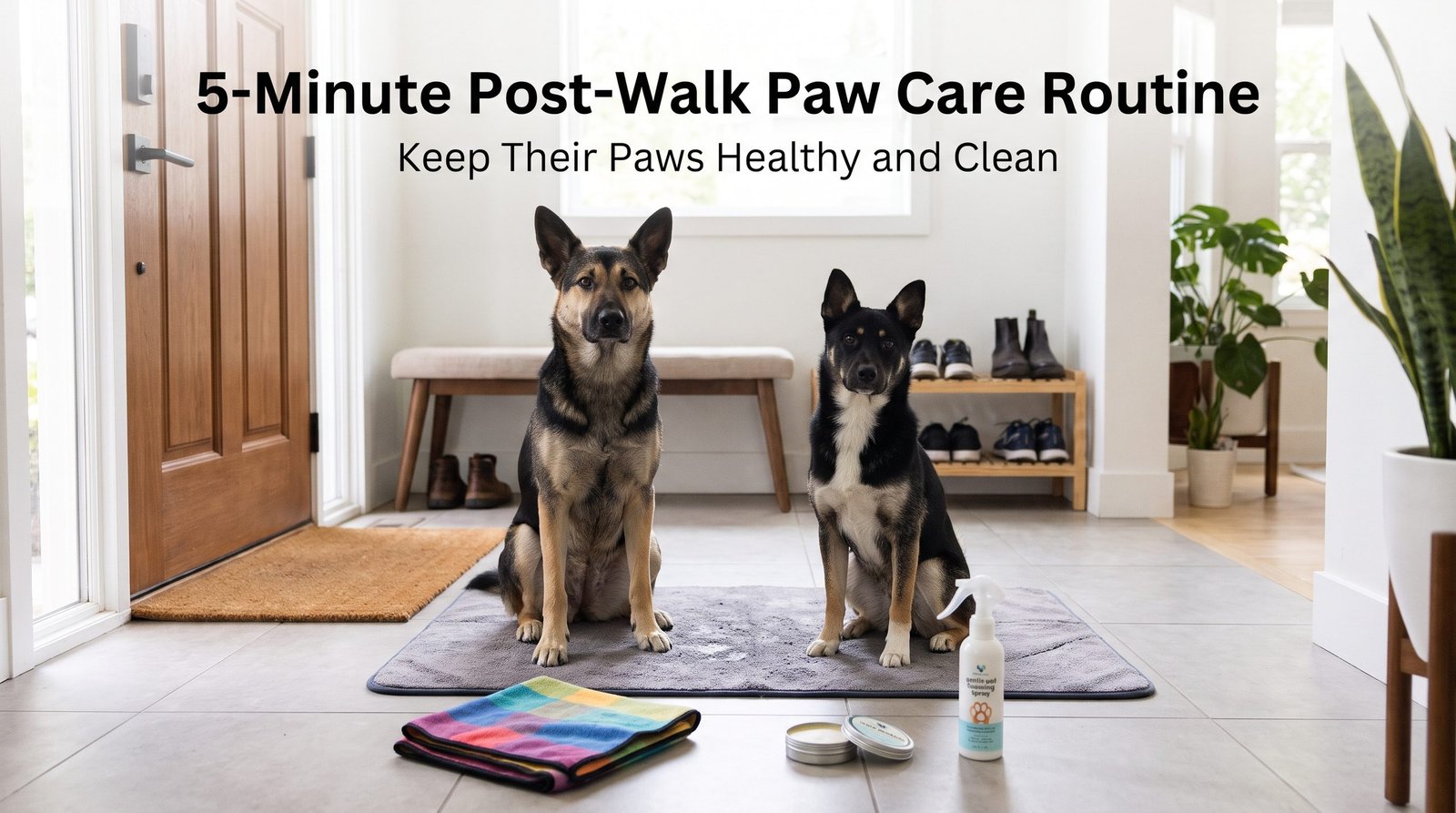
Establishing a swift protocol for cleaning and drying dog paws the moment a dog crosses the threshold after a trek through rain, slush, or winter snow prevents pododermatitis and severe fur matting. Trapped moisture combined with canine body heat transforms the webbing between paw pads into an optimal incubator for Malassezia yeast and pathogenic staphylococci. Furthermore, chemical deicers such as calcium chloride inflict thermal-chemical burns and micro-fissures across sensitive digital pads. Forcing a dog into a full bath after every wet outing is inefficient and strips essential epidermal lipids; establishing an entrance-based, 5-minute targeted drying protocol is the definitive clinical solution.
1. The Dermatological Imperative for Immediate Paw and Coat Drying
Disrupting the Interdigital Fungal Incubation Cycle
Canine paws possess tightly enclosed interdigital folds that lack natural airflow. When moisture from rain or melting snow remains trapped within these micro-crevices for over an hour, epidermal pH shifts upward and the stratum corneum undergoes maceration. This softened, humid barrier allows opportunistic yeast species to explode in population, triggering the persistent, compulsive paw-licking cycle that inevitably manifests as ulcerative pododermatitis.
Neutralizing the Chemical Toxicity of Winter Deicing Salts
Municipalities spread calcium chloride rather than pure sodium chloride on freezing roads due to its rapid exothermic ice-melting properties. When these caustic pellets lodge between toes, they extract moisture from the dog’s skin while generating local heat, inducing chemical irritation, painful cracking, and deep ulcerations. If ingested during grooming, deicers cause severe mucosal burns in the oral cavity and acute gastritis. Rinsing away these chemical salts must take priority before applying any drying towels.
2. The 5-Minute Entryway Protocol: Step-by-Step Execution
Transforming your entryway into a structured staging area prevents messy home contamination and delivers a stress-free transition for your dog.
[Step 1: Lukewarm Paw Plunge / Chemical Dilution (No Harsh Shampoos)]
  → [Step 2: Microfiber Blotting Compression (Never Scrub)]
  → [Step 3: Cool-Air Interdigital Blast & Lipid Wax Sealing]
- Localized Rinsing via Portable Paw Washer
- Instead of a full bathtub ordeal, utilize a silicone-bristled paw washer cup or a basin filled with lukewarm water.
- Dip each foot and rotate gently for three revolutions to dislodge mud, silt, and caustic salt crystals trapped between the toes. Avoid shampoos during routine daily returns; pure lukewarm water effectively dilutes chemical salts without stripping natural sebum.
- Microfiber Blotting Extraction (Compression Technique)
- Avoid abrasive back-and-forth rubbing with standard terry cloth, which abrades hair cuticles and twists dense undercoats into tight mats.
- Wrap an ultra-absorbent microfiber towel (minimum 800 GSM) around each limb and squeeze firmly, utilizing hydraulic pressure to draw moisture outward from the deep coat.
- Targeted Interdigital Cool Airflow and Barrier Balm Application
- Switch a hair dryer or high-velocity pet dryer to the cool or lukewarm setting. Gently splay the toes apart and direct airflow into the interdigital skin folds until bone-dry.
- Immediately massage a thin layer of natural beeswax or shea butter paw balm across the pads to seal the lipid barrier and prevent dehydration micro-tears.
3. Post-Walk Protocol Matrix Based on Environmental Exposure
Matching the cleaning intervention to the specific environmental contaminant prevents both undertreatment and over-stripping of canine skin.
| Environmental Exposure | Optimal Cleansing Method | Drying Protocol | Critical Follow-Up Action |
| Light Rain & Wet Pavement | Hypoallergenic, alcohol-free wet wipe | High-GSM microfiber blot | Inspect toe webbing for trapped dampness |
| Heavy Mud & Off-Road Trails | Paw plunger cup with pure warm water | Microfiber wrap + 2-min low-heat blast | Line-comb feathering to extract dried grit |
| Slush & Chemical Road Salt | Thorough running water rinse between toes | 100% cool-air interdigital dry | Immediate application of thick protective wax |
Critical Warning: Human household disinfectant wipes contain quaternary ammonium compounds and alcohol, which destroy the canine lipid envelope and cause rapid hyperkeratosis. Always deploy pH-neutral, pet-certified formulations or pure water.
4. Underbody Shielding and Quick-Dry Techniques for Double-Coated Breeds
Low-clearance chest and abdominal coats bear the brunt of water, gravel, and snow splashback.
- Deploying Protective Rain Bibs: For active dogs or double-coated breeds who resist full waterproof raincoats, utilize lightweight, chest-and-belly coverage aprons. These minimize abdominal grit accumulation by up to 70% while maintaining full freedom of movement.
- High-Velocity Blowers over Heat Dryers: High-velocity dryers rely on kinetic kinetic air volume (CFM) rather than thermal heat to shear water droplets straight off the fur shaft. This preserves the natural water-repellent guard hairs of double coats without causing heat-induced skin itching.
- Silicone Dematting Slicks: Never drag stiff wire pin slickers violently through damp coats. Use flexible silicone-tipped tools to smooth out tangles along the growth grain while applying cool drying airflow to prevent damp matting.
Frequently Asked Questions (FAQ)
Q1. Does washing my dog’s feet after every single walk cause dermatitis?
A. Water contact alone does not cause pododermatitis; residual dampness left between the digital pads is the true culprit. Yeast organisms require a prolonged humid pocket to multiply. As long as you dry the interdigital webbing thoroughly using low-temperature airflow, washing feet daily is entirely safe and medically necessary during winter.
Q2. How can I stop snowballs from clumping between my dog’s toes during freezing walks?
A. Snowballs form when long tufts of hair extending beyond the pads catch wet snow, which melts from body heat and refreezes into jagged ice lumps. Neatly clip the fur flush with the pad level using safety trimmers before winter, and coat the underside of the paws with pure medical-grade petroleum jelly or specialized mushing wax prior to stepping outside.
Q3. Are dog booties a superior alternative to post-walk washing?
A. Booties provide uncompromising protection against sharp ice shards and toxic chemical deicers. However, ensure boots are lightweight and flexible, such as dipped-latex or breathable cordura models. Heavy, rigid-soled boots disrupt proprioceptive sensory feedback from the paws, potentially distorting natural gait biomechanics and stressing canine carpal joints.
Mastering post-walk wet weather maintenance is a matter of anatomical precision and speed. Discontinue stressful, skin-drying daily baths in favor of targeted warm-water paw plunges, microfiber compression drying, and thorough cool-air interdigital moisture extraction. Implementing this structured 5-minute routine ensures your dog remains free from painful paw sores while enjoying active, all-weather outdoor adventures.
- Meta Description: Master the post-walk 5-minute protocol for cleaning and drying wet paws and coats after rain or snow, preventing yeast dermatitis and chemical deicer burns.