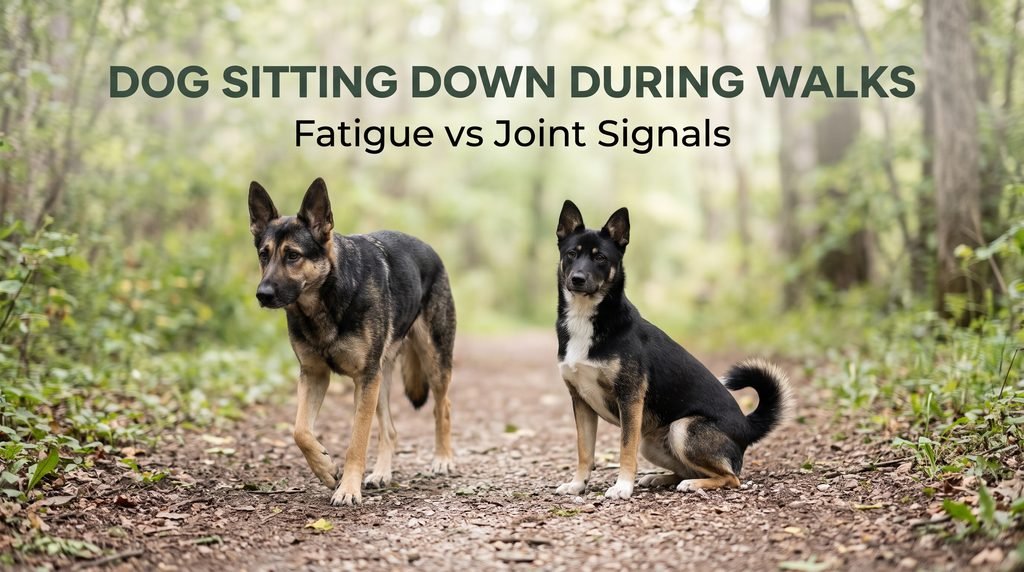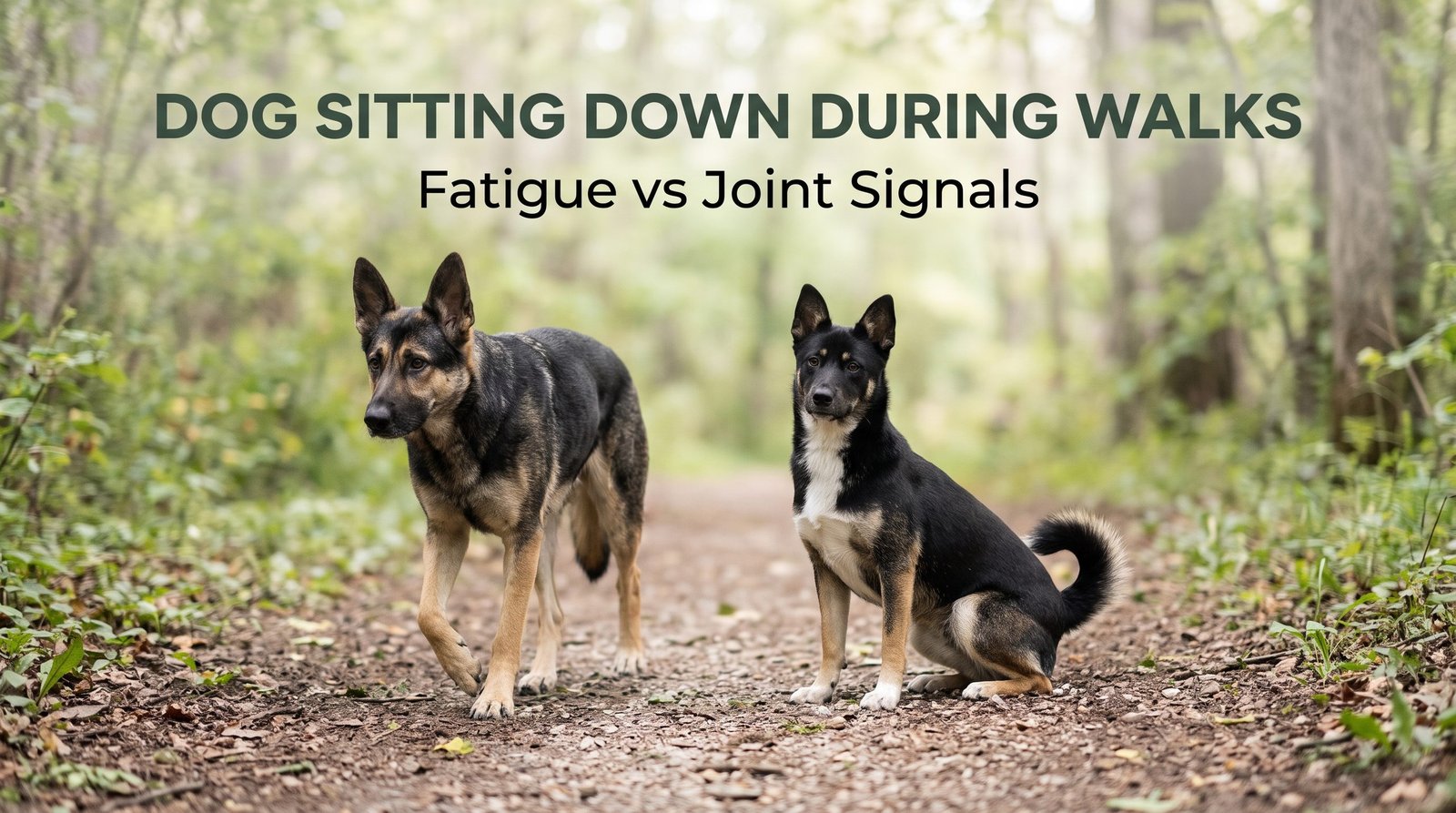
If you notice your dog sitting down on walks out of nowhere, it can be difficult to tell the difference between simple metabolic fatigue and acute musculoskeletal distress. Continuing a walk under the assumption that a dog is merely being stubborn or slightly tired can accelerate chondral damage, induce cruciate ligament tears, or aggravate intervertebral disc herniation.
Metabolic fatigue is a reversible physiologic state characterized by lactic acid accumulation, whereas pain-induced hesitation is an involuntary biomechanical coping mechanism to unload an affected joint. Recognizing early gait compensations and deploying an objective 3-step field differential protocol ensures long-term orthopedic preservation for your dog.
1. Biomechanical Etiology: Metabolic Fatigue vs. Pain Avoidance
The reluctance to advance during a walk stems from two fundamentally distinct pathways: physiological exhaustion and musculoskeletal pathology.
Physiological Fatigue and Environmental Triggers
- Metabolic Exhaustion and Glycogen Depletion: Occurs when duration or elevation exceeds the dog’s conditioned baseline, leading to cellular energy depletion that prompts voluntary rest.
- Surface Radiant Heat and Paw Stress: Asphalt temperatures exceeding 50°C (122°F) or corrosive road de-icing salts compromise digital pad integrity. Because dogs rely predominantly on respiratory panting and limited footpad perspiration for thermoregulation, elevated surface heat forces rapid deceleration and shade-seeking sitting behavior.
- Psychological Reluctance: Involves acute noise phobia, site-specific behavioral aversion, or reluctance to end outdoor enrichment.
Orthopedic and Neurological Pathologies
- Osteoarthritis (OA) and Patellar Luxation: Mechanical erosion of articular cartilage exposes subchondral nerve endings. Dynamic weight-bearing generates sharp somatic pain, compelling the dog to drop its pelvis to fully relieve vertical load.
- Intervertebral Disc Disease (IVDD) and Lumbosacral Stenosis: Compression of spinal nerve roots disrupts efferent motor signals and afferent proprioceptive feedback, causing hindlimb paresis and sudden collapse.
- Cardiorespiratory Insufficiency: Conditions such as myxomatous mitral valve disease (MMVD) or tracheal collapse restrict oxygen delivery under exertion, culminating in systemic hypoxemia and immediate physical collapse.
2. Recognizing Subtle Gait Asymmetry (Lameness)
Lameness represents a dynamic disruption in bilateral structural symmetry, presenting in discrete mechanical indicators during early progression.
Core Indicators of Dynamic Asymmetry
- Head Bobbing: When weight is applied to a painful thoracic limb (front leg), the head jerks upward abruptly to minimize loading, then drops downward when the healthy limb strikes the ground.
- Pelvic Hike and Bunny Hopping: In unilateral pelvic limb (rear leg) pain, the pelvis tilts sharply upward and outward during the stance phase of the injured leg. Bilateral stifle or hip pain routinely manifests as “bunny hopping,” where both rear legs advance simultaneously.
- Shortened Stance Duration: Disproportionate ground contact duration between contralateral limbs serves as a definitive metric of weight-bearing aversion.
Static Stance and Resting Clinical Checklist
- [ ] Exhibits joint rigidity and limping during the first 5–10 strides after waking.
- [ ] Hesitates before jumping into vehicles or onto elevated furniture where it previously leapt effortlessly.
- [ ] Decelerates noticeably on descending inclines or shifts body alignment obliquely to favor a limb.
- [ ] Displays lip licking, head turning, or vocalization upon palpation of the stifle, hock, or hip.
- [ ] Assumes an asymmetric “frog-leg” posture with one rear leg extended outward while seated.
3. The 3-Step Field Differential Protocol: Fatigue vs. Joint Pathology
When a dog abruptly halts and sits during a walk, utilize this 3-step verification protocol to determine the underlying cause.
[Step 1: 10-Minute Shade Rest] ➔ [Step 2: Non-Verbal Stimulus Test] ➔ [Step 3: First-10-Strides Evaluation]
- Step 1: Complete 10-Minute Shaded RestHalt locomotion immediately, transition the dog to a flat, shaded substrate, provide small amounts of water, and allow respiratory rates to stabilize below 40 breaths per minute. Simple fatigue resolves as core temperature normalizes, prompting spontaneous sniffing and exploratory posture.
- Step 2: High-Value Stimulus Response TestPlace a high-value treat or toy 2 meters ahead while remaining neutral. A dog experiencing simple fatigue will stand promptly and advance. A dog suffering from joint or axial skeletal pain will exhibit ocular interest while remaining recumbent, delay rising past 5 seconds, or struggle to bear weight on the pelvic limbs.
- Step 3: Stance Evaluation Over the First 10 StridesScrutinize the resumption of walking over the initial 10 paces. Persistent limping, shortened step lengths, or failure to bear weight evenly when performing a full-body shake confirms underlying orthopedic or neurologic trauma rather than fatigue.
4. Emergency Field Management and Preventative Strategies
Immediate cessation of forced locomotion prevents micro-traumas from degenerating into complete structural failure.
On-Site Emergency Rules
- Immediate Locomotion Cessation: Never pull the leash to force forward progress. Carry dogs under 15 kg; for larger breeds, navigate slowly across flat turf to the nearest extraction vehicle.
- Avoid Field Joint Manipulation: Vigorous field massage or forced range-of-motion testing on inflamed tissue amplifies interstitial hemorrhaging and ligamentous instability. Maintain limb neutrality until veterinary diagnostics can be performed.
Comprehensive Homecare Protocol
| Core Category | Clinical Protocol | Therapeutic Benefit |
| Weight Optimization (BCS 4–5) | Precise caloric restriction and monthly BCS scoring | Decreases vertical compressive forces on stifles and hips by up to 30% |
| Traction Enhancement | Non-slip residential runners and access ramps | Eliminates rotational shear stress on stabilizing ligaments |
| Pad Surface Integrity | Regular trimming of interdigital hair and claw maintenance | Restores physiological digit breakover angles and proprioceptive contact |
| Chondroprotective Supplementation | Low-molecular-weight chondroitin, glucosamine, and EPA/DHA | Enhances synovial fluid viscosity and suppresses inflammatory cytokines |
5. Frequently Asked Questions (FAQ)
Q1. Should walks be eliminated entirely if patellar luxation is diagnosed?
No. Complete immobilization causes rapid atrophy of the quadriceps and hamstring complexes, undermining joint stability. Eliminate asphalt running, stairs, and steep terrain, and transition to controlled 15-minute walks twice daily over flat turf to preserve muscular mass without joint wear.
Q2. My dog experiences minor hindleg tremors after walks. Is this simple muscle fatigue?
While transient post-exercise fatigue can trigger localized fasciculations, chronic post-walk tremors frequently reflect spinal root impingement (IVDD) or severe compensatory overload from hip dysplasia. If tremors persist past 30 minutes of rest or accompany spinal guarding, schedule a comprehensive orthopedic and neurological evaluation immediately.
Actionable Takeaway
Do not dismiss sitting down during walks as stubbornness. Record a 10-second slow-motion video of your dog’s gait from behind using your smartphone; this footage serves as invaluable diagnostic data for your veterinarian. Monitor the initial 10 strides of every walk starting today to safeguard your dog’s long-term mobility.
Meta Description: Learn how to differentiate dog sitting behavior during walks caused by fatigue from joint pain. Includes a 3-step field test, gait asymmetry indicators, and homecare advice.