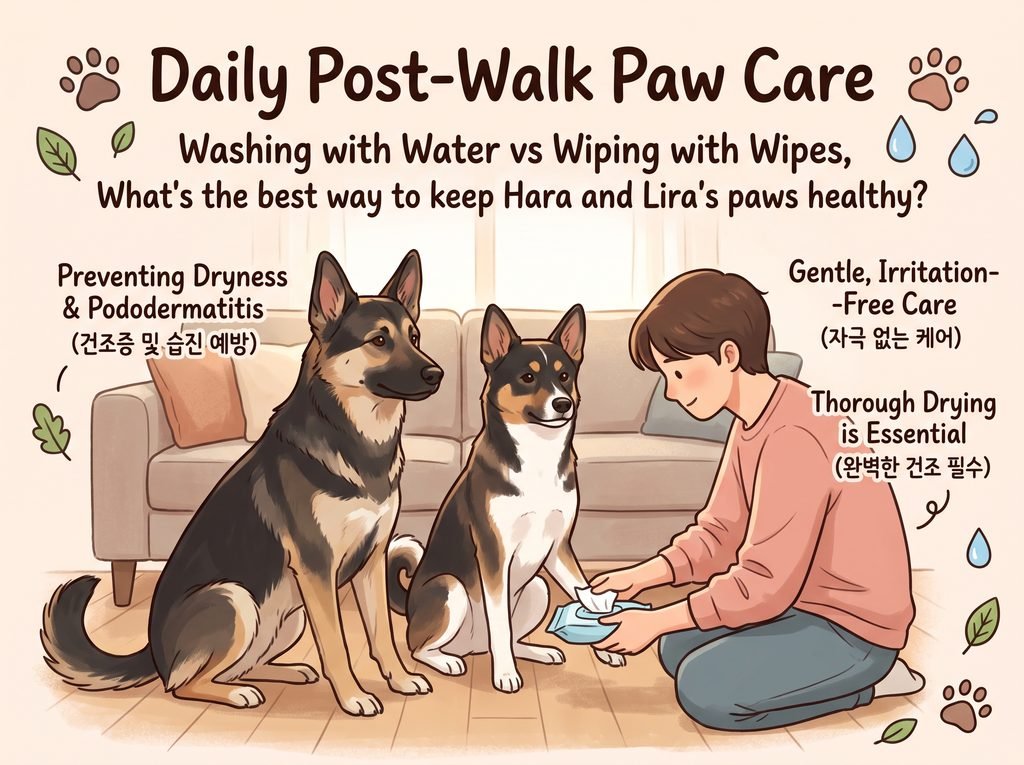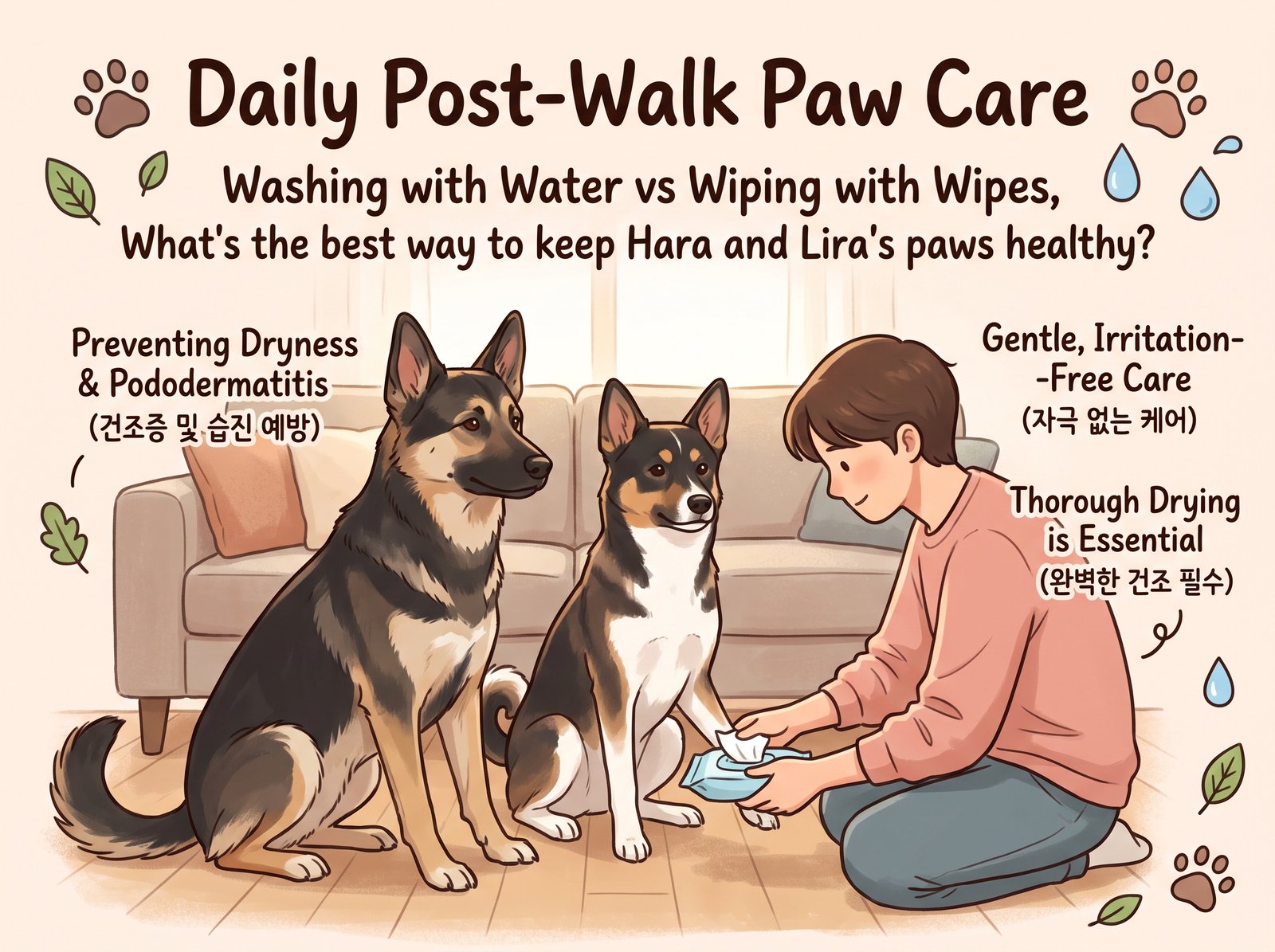
Implementing proper dog paw care after walk routines is critical for protecting your dog’s pad barrier. Many pet owners routinely wash their pet’s feet with running water and soap after outdoor exercise. However, excessive washing breaks down the protective lipid layer of the foot pads, causing dry skin, micro-cracks, and chronic interdigital dermatitis (pododermatitis).
Optimal post-walk hygiene focuses on two key rules: selecting the right cleaning method based on ground contamination, and ensuring complete moisture control. Below is the physiological guide to keeping paws resilient, crack-free, and pain-free.
1. Washing vs. Wiping: Dermal Barrier Mechanics
Canine digital pads are lined with a thick, keratinized stratified squamous epithelium. Because these pads lack protective sebaceous glands, they depend strictly on endogenous cellular lipids to retain elasticity.
1-1. When Full Water Rinsing Is Mandatory
Daily soaking is harmful, but specific environmental contaminants require prompt water dilution:
- Muddy Slurry and Stagnant Rainwater: Trapped bacteria deep inside the interdigital webbing must be mechanically flushed away.
- Winter De-icing Salts (Calcium Chloride): Chemical de-icers cause acute exothermic chemical burns and toxicity if groomed and swallowed. Immediate lukewarm rinsing is non-negotiable.
- The Critical Hazard: Leaving interdigital spaces damp provides an optimal breeding environment for Malassezia yeast and Staphylococcus bacterial proliferation.
1-2. When Pet-Safe Wiping Is Superior
For standard daily walks across dry pavements, hard-packed trails, and manicured lawns:
- Use alcohol-free, pH-balanced (pH 7.0–7.5) veterinary wipes or waterless foaming paw cleanser.
- This approach dislodges surface particulates without degrading the pad’s protective moisture barrier or saturating internal toe fur.
| Metric | Water Rinsing Protocol | Pet-Safe Wiping Protocol |
| Indications | Deep mud, contaminated slush, road chemical de-icers | Dry pavement, clear dirt paths, routine sunny day walks |
| Barrier Impact | High disruption (causes severe xerosis if done daily) | Zero disruption (protects the natural lipid matrix) |
| Infection Risk | High if toe webbing remains damp | Extremely low when using balanced antimicrobial wipes |
| Post-Care Step | Mandatory 100% cool-air blow dry | Target application of natural paw balm |
2. The 3-Step Protocol to Prevent Dry Pads and Pododermatitis
For active working dogs and high-energy companions like Hara and Lira, follow this clinical step-by-step framework upon returning indoors:
Step 1: Environmental Triaging
Check the paws before entering living quarters. If the pads are simply dusty, massage a no-rinse pet foam into the pad surface and wipe away debris with a microfiber cloth. If mud or de-icing salt is present, swiftly rinse only the lower paws under lukewarm (36°C) running water without harsh detergents.
Step 2: Absolute Drying with Cool Air
Failing to dry the interdigital crevices completely is the primary trigger of yeast dermatitis.
- Compression Blotting: Never vigorously rub wet paws with a towel, as friction damages tender interdigital tissue. Compress the towel around the paw to draw water out.
- Cool-Air Blow Drying: Position a hair dryer strictly on the COOL setting. Warm air evaporates surface moisture too quickly, aggravating pruritus (itching). Spread the toes apart to desiccate the fur roots entirely.
Step 3: Lipid Barrier Rebuilding
Once the skin is completely dry, restore surface lipids:
- Apply an organic, lick-safe paw balm formulated with beeswax, shea butter, or plant ceramides over the weight-bearing pads.
- Crucial Rule: Never apply heavy balms into the tight skin folds between the toes; occluding this area traps sweat and breeds bacteria.
⚠️ Diagnostic Indicator: Compulsive Paw Licking
If your dog obsessively licks or gnaws at a foot post-walk, it signifies established inflammation, an allergic reaction, or a lodged foreign object (such as a thorn or glass splinter). Never re-wash the foot; maintain dryness and consult your veterinarian.
3. Seasonal Safeguards: De-icers and Thermal Asphalt
- Winter Chemical Burns: De-icing salts react exothermically upon contact with paw moisture. Always rinse chemical residue immediately after snow walks, or utilize fitted protective booties.
- Summer Thermal Burns: Direct sunlight can raise asphalt temperatures past 55°C when ambient air is 30°C. Test the ground with the back of your hand for 7 seconds. If scorching, restrict walks to early mornings or grassy paths.
4. Frequently Asked Questions (FAQ)
Q1. How frequently should hair between paw pads be trimmed?
A. Every 2 to 4 weeks using a round-tip grooming clipper. Excess pad fur collects moisture and outdoor grit, increasing pododermatitis risk and causing indoor slipping injuries.
Q2. Is human petroleum jelly safe for cracked canine paws?
A. While non-toxic in trace amounts, petroleum jelly forms a heavy occlusive layer that gathers household dirt and may cause digestive distress if ingested through licking. Dedicated pet balms are far safer and more effective.
5. Practical Summary: Long-Term Mobility
Canine paw health relies on sensible daily moisture control rather than excessive sanitization. For regular dry walks, prioritize gentle dog paw care after walk routines utilizing dedicated wipes, reserve water baths strictly for severe grime, and consistently dry interdigital spaces using cool air to safeguard your dog’s lifelong comfort.