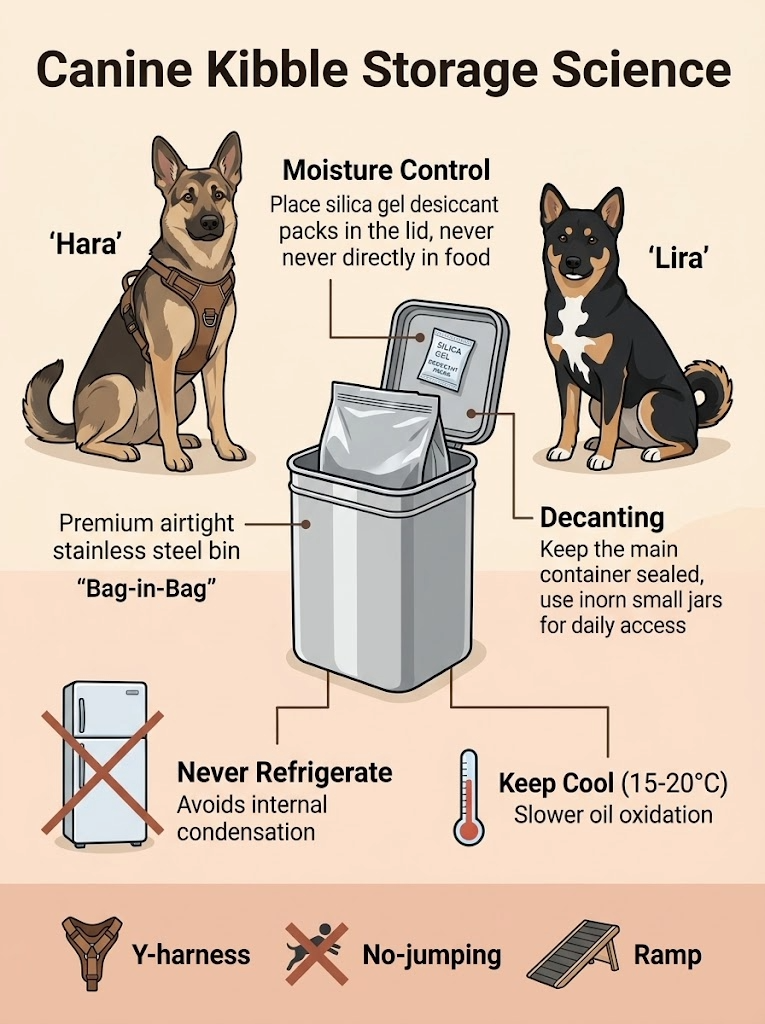
Proper kibble storage is essential because the moment a bag of dry dog food is unsealed, exposure to atmospheric oxygen, ambient humidity, and photolytic radiation initiates lipid oxidation and rapid degradation of vital micronutrients. Rancid fats degrade palatability, irritate gastrointestinal mucosal linings, and induce chronic enteritis while destroying fat-soluble micronutrients.
Preserving nutrient density requires far more than transferring kibble into a plastic container. You must eliminate oil contact surfaces and execute consistent degreasing regimens to ensure metabolic safety.
1. Primary Drivers of Dry Food Degradation
Lipid Peroxidation and Oxygen Exposure
Extruded dry kibble is top-dressed with animal fats and vegetable oils to elevate caloric density and palatability. Contact with air initiates free-radical attacks against unsaturated fatty acids. This lipid peroxidation breaks down fat-soluble vitamins (A, D, E) and yields toxic secondary oxidation products including aldehydes and ketones.
Moisture Uptake and Mycotoxin Hazards
When storage humidity exceeds 60%, dry kibble draws in moisture. This micro-environment fosters invisible Aspergillus fungal colonies capable of synthesizing carcinogenic aflatoxins and other lethal mycotoxins that cause acute and chronic hepatic injury.
Polymer Adsorption in Plastic Containers
Standard food-grade plastics (polypropylene, polyethylene) feature microscopic pores that adsorb migrating lipids. Over time, residual oils deeply penetrate container walls, go rancid, and cross-contaminate every fresh batch introduced into the bin.
2. Comprehensive Material Performance Comparison
Container selection must be evaluated on oxygen transmission rates and lipid adsorption resistance rather than sheer capacity.
| Material Type | Hermetic Oxygen Barrier | Lipid Absorption Resistance | Odor Retention Resistance | Sterilization & Hygiene |
| Standard Plastic Bin | Poor (Gaskets degrade quickly) | Highly Vulnerable (Oils leach in) | Severe (Persistent rancid odor) | Micro-scratches harbor bacteria |
| Vacuum Sealing Canister | Superior (Actively expels oxygen) | Moderate (Dependent on liner) | Moderate | Multi-part valve maintenance |
| Food-Grade 304 Stainless | Excellent (With silicone latch seal) | Superior (Zero lipid adsorption) | Absolute (Zero odor retention) | Heat sterilizable, non-porous |
| Tempered Glass Canister | Excellent (Requires UV shielding) | Absolute (Chemically inert) | Absolute (Zero odor retention) | Heavy, fragile handling |
3. Five-Step Protocol for Airtight, Odor-Free Kibble Preservation
Step 1: Implement the “Bag-in-Box” Technique
Never pour kibble directly into a storage bin. Commercial pet food bags are engineered using multi-layer foil barrier laminates designed specifically to resist light, oxygen, and moisture. Place the original bag directly inside the sealed storage container to eliminate oil contact with container walls.
Step 2: Strategic Desiccant Pack Placement
Placing silica gel directly on top of loose food only dehumidifies headspace air. Position food-grade silica gel packs inside the container lid or between the original bag exterior and container walls to maintain internal dry margins.
Step 3: Decant into Weekly Working Batches
Opening a large 10kg container twice daily floods the reserve food with fresh humidity and oxygen. Decant a 7- to 10-day ration into an airtight working container, keeping the primary bulk container closed undisturbed in between.
Step 4: Degreasing and Sanitization Cadence
Between bag replacements, wash storage bins using warm water and baking soda or mild surfactant to dissolve polymerized grease. Follow with a food-grade alcohol wipe and allow 100% complete air drying to eradicate dormant mold spores before refilling.
Step 5: Thermal Stability and Photoprotection
Store pet food between 15°C and 20°C. Storage temperatures exceeding 25°C double the kinetic rate of lipid oxidation. Never store food near heat sources, under sinks, or on balconies exposed to thermal fluctuations.
Crucial Warning (Avoid Refrigeration): Storing dry kibble in a refrigerator triggers internal container condensation when brought to room temperature. This condensation is rapidly absorbed by kibble, creating fungal blooms within days.
4. Indicators of Food Spoilage: When to Discard
- Paint-Like or Crayon Odor: An acrid, stale scent indicates advanced lipid autoxidation and vitamin breakdown.
- Surface Tacky Residue or Discoloration: Greasy stickiness or grayish powder points to moisture absorption and microbial proliferation.
- Uncharacteristic Meal Refusal: Canines possess olfactory sensitivity thousands of times keener than humans; sudden refusal of a familiar batch indicates early fungal or oxidative spoilage.
Frequently Asked Questions (FAQ)
Q1. Can I use uncooked rice or activated charcoal as a desiccant in the kibble bin?
No. Loose rice and charcoal shed particulates and attract pantry pests such as flour moths and grain beetles. Use sealed, tear-resistant food-safe silica gel packets.
Q2. The printed expiration date is a year away; how long is it safe after opening?
Expiration dates apply exclusively to factory-sealed packages. Once the barrier seal is compromised, finish the entire bag within 4 to 6 weeks to prevent severe rancidity.
Feed freshness is the foundation of gastrointestinal health and metabolic longevity. Retain original packaging, eliminate thermal stress, and protect your dog’s daily bowl from silent oxidation.
Meta Description: A practical guide to preventing dry dog food rancidity, moisture accumulation, and mycotoxins: container material comparisons, the Bag-in-Box technique, and storage rules.