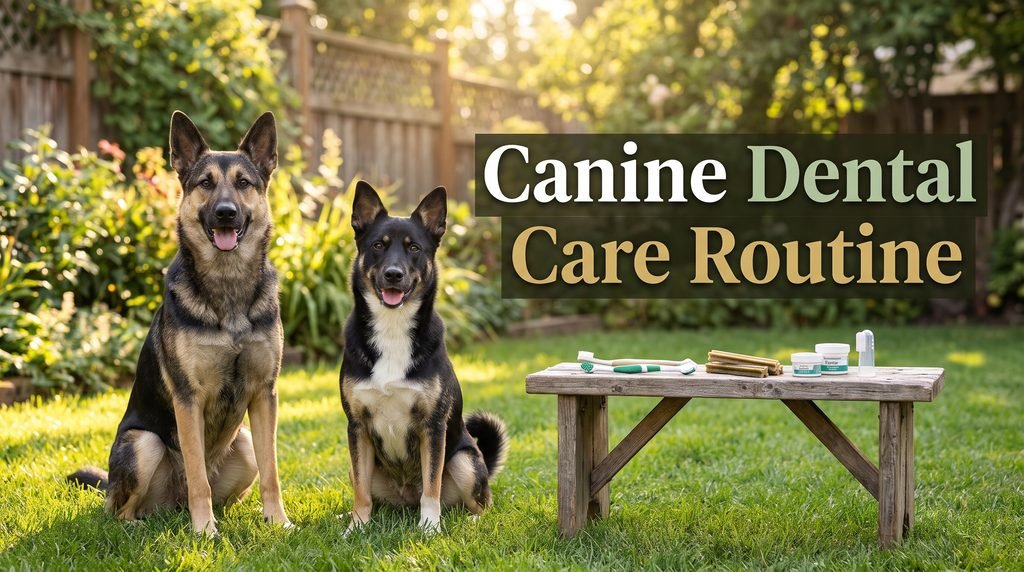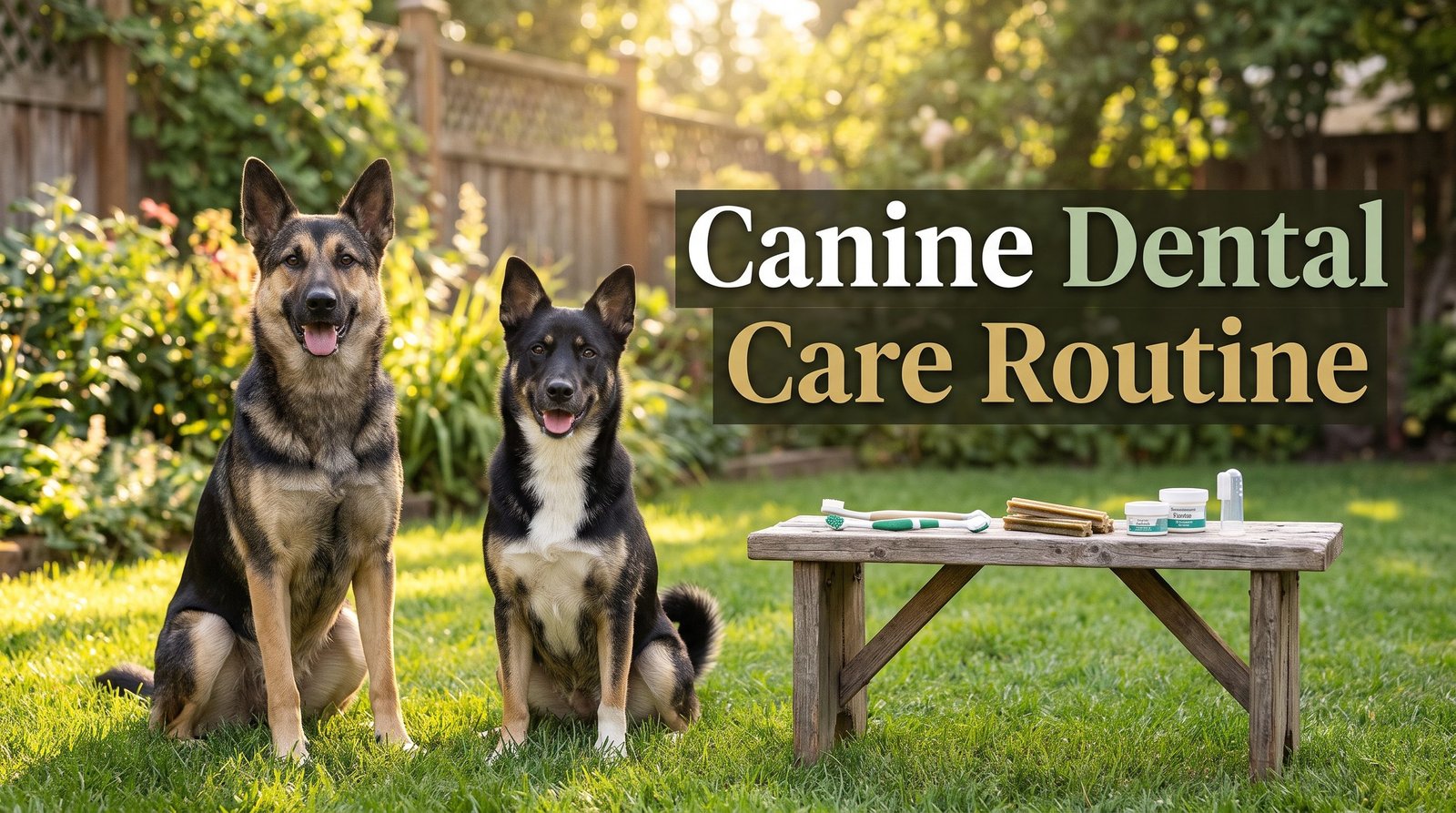
Establishing an effective dog dental care routine is critical, as the soft bacterial biofilm (plaque) on a dog’s teeth interacts with calcium and salivary glycoproteins within 48 to 72 hours following a meal, calcifying into dense, insoluble calculus (tartar). This porous structure acts as a permanent microbial reservoir, accelerating gingivitis, progressive periodontitis, and alveolar bone resorption. Left unchecked, pathogenic bacteria enter the periodontal vasculature, dramatically increasing systemic risks of bacterial endocarditis, hepatic microabscesses, and chronic renal disease.
Relying exclusively on dental treats fails to clean subgingival pockets, while forceful manual brushing frequently causes lasting behavioral aversion. A successful preventative strategy combines chemical plaque inhibition with targeted mechanical debridement into a predictable, balanced weekly dental protocol.
1. Canine Oral Physiology and the Kinetics of Tartar Formation
Salivary pH and Accelerated Mineralization
While human saliva is slightly acidic (pH 6.5–7.0), canine saliva is distinctly alkaline, maintaining a pH of 7.5 to 8.5. This high alkalinity confers natural resistance against acid-induced dental cavities (caries). However, it dramatically accelerates the ionic precipitation of calcium carbonate and phosphate, calcifying soft bacterial plaque into hard calculus roughly four to five times faster than in human dentition.
Progression from Plaque to Systemic Infiltration
- Phase 1 (Biofilm Deposition): Salivary pellicle forms on tooth enamel within hours, colonized by gram-positive aerobic bacteria.
- Phase 2 (Mineralization & Maturation): By 72 hours, mineralization secures stubborn tartar that cannot be removed by soft-bristle brushing.
- Phase 3 (Subgingival Invasion): Tartar expands apical to the gumline, harboring aggressive gram-negative anaerobes that degrade periodontal ligaments and alveolar bone.
Clinical Principle: Brushing cannot scrape away established, mineralized calculus. The fundamental goal of at-home oral care is disrupting the soft microbial film before it undergoes ionic crystallization within that critical 48-to-72-hour window.
2. Dental Chews vs. Manual Brushing: Functional Comparison
While functional dental chews stimulate salivary flow and scrape the coronal surfaces of premolars, they cannot access the gingival sulcus or lingual surfaces. Optimal at-home prophylaxis demands utilizing both methods strategically.
Dental Care Modality Matrix
| Modality | Primary Mechanism | Anatomical Coverage & Benefits | Limitations & Precautions |
| Ultra-Soft Canine Toothbrush | Precise mechanical debridement | Gingival margin, canine teeth, carnassials | Requires gradual desensitization and handler dexterity |
| Silicone Finger Cap | Tactile tissue stimulation | Intro-stage acclimation, promotes gingival microcirculation | Fails to penetrate interdental crevices or deep sulci |
| VOHC-Accepted Dental Chew | Friction & polyphosphate chelation | Masticatory stimulation, reduces supragingival plaque | Risk of esophageal obstruction if swallowed whole; caloric impact |
| Enzymatic Toothpaste | Glucose oxidase / lactoperoxidase | Inhibits bacterial growth and neutralizes volatile sulfur compounds | Ineffective without mechanical contact to break up biofilm |
3. Four-Step Systematic Desensitization for Stress-Free Brushing
Forcing a toothbrush into an unprepared dog’s mouth activates sympathetic distress responses and permanently solidifies toothbrush reactivity. Desensitization must use positive reinforcement.
- Step 1: Labial Margin Touch Desensitization (Days 1–5)
- Gently lift the lateral edge of the upper lip for 1 second, immediately mark the behavior, and deliver a high-value food reward. Repeat until the dog exhibits zero avoidance posture.
- Step 2: Enzymatic Paste Palatability Conditioning (Days 6–8)
- Allow the dog to lick poultry- or malt-flavored enzymatic veterinary toothpaste directly from your finger without any oral manipulation.
- Step 3: Gauze-Assisted Rubbing (Days 9–15)
- Wrap medical gauze around your index finger, apply enzymatic gel, and gently rub the labial aspect of the large canines in small circular motions. Gradually extend backward toward the upper carnassial teeth.
- Step 4: Bristle Introduction with the Modified Bass Technique
- Introduce a soft bristle brush angled at 45 degrees toward the gumline. Execute short horizontal vibrating strokes followed by a sweeping motion away from the gingival margin.
4. The Integrated Weekly Oral Prophylaxis Schedule
- Monday / Wednesday / Friday / Sunday (4x Weekly): Evening Precision Brushing
- Focus strictly on the buccal surfaces of the maxillary fourth premolars and upper/lower canines. Complete the session within 2 to 3 minutes.
- Tuesday / Thursday / Saturday (3x Weekly): Monitored Dental Chew Session
- Provide a calibrated, VOHC-approved chew during non-brushing days to encourage salivary washing. Hold one end of the chew to ensure the dog works it with both left and right molars rather than gulping it down whole.
- Daily Habit: Refresh clean drinking water twice daily to flush loose residual food debris after meal times.
Frequently Asked Questions (FAQ)
Q1. Can regular brushing remove thick, dark brown tartar that is already present?
No. Once calculus is fully formed, it is microscopically fused to the enamel pellicle. At-home attempts to scrape it off with metal scalers will scratch the protective enamel, creating microscopic grooves where bacteria accumulate even faster. Established tartar requires veterinary ultrasonic scaling under anesthesia; home brushing serves as preventative maintenance.
Q2. Is it safe to use pediatric non-fluoride human toothpaste?
Never use human toothpaste on canines. Even non-fluoride formulations often contain synthetic detergents (Sodium Lauryl Sulfate) that induce severe gastric distress, or artificial sweeteners like Xylitol (Birch bark extract). Ingesting even small quantities of xylitol triggers massive endogenous insulin surges, resulting in severe hypoglycemia and acute hepatic necrosis.
Canine Dental Health Daily Checklist
- Daily: Visual inspection of the gingival margin for erythematous inflammation (redness).
- 4x Weekly: 45-degree angle precision brushing focused on upper premolars and canines.
- 3x Weekly: Regulated dental chew administration (adjusting overall daily caloric intake by 10%).
- Annual: Professional veterinary dental examination including periodontal probing.
Meta Description:
Master canine dental care with this weekly routine combining brushing techniques and dental chews to prevent periodontal disease and protect long-term canine health.