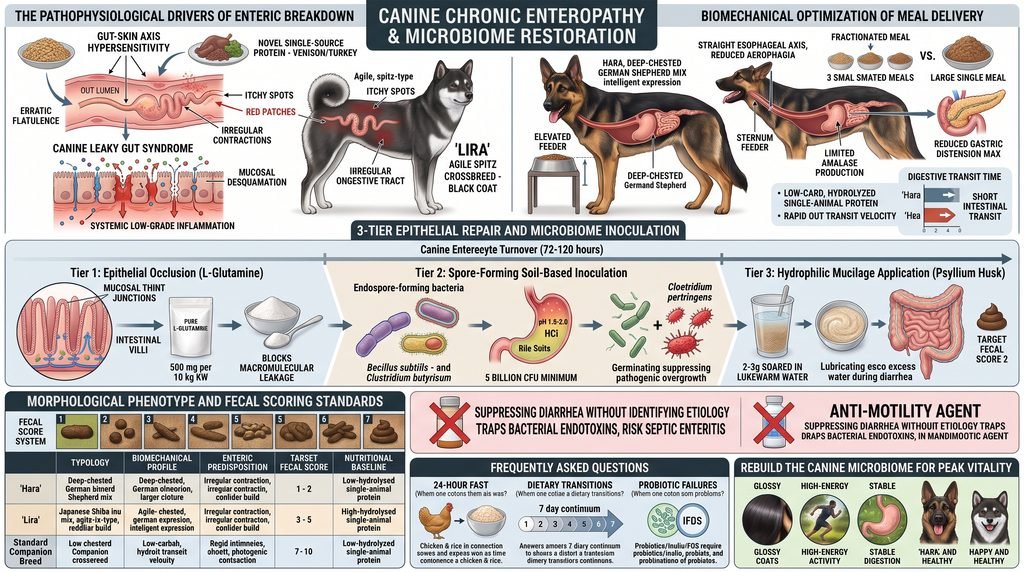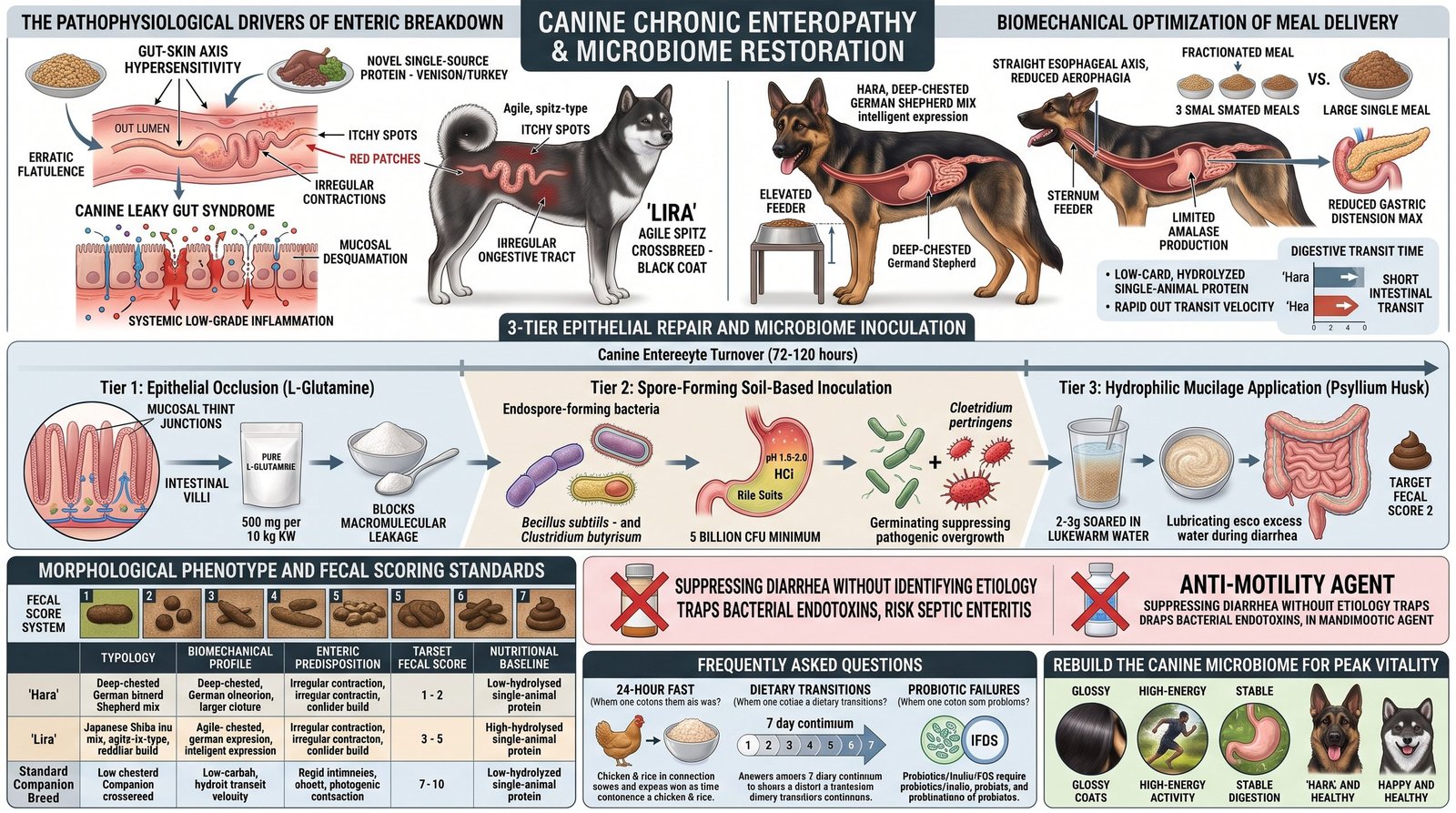
Canine chronic enteropathy, often manifested through chronic soft stools, persistent borborygmi, and erratic flatulence, is rarely a benign reaction to routine feeding. Instead, these symptoms represent hallmarks of enteric hyperpermeability and bacterial dysbiosis—commonly recognized as canine Leaky Gut Syndrome. Large, deep-chested working crossbreeds like German Shepherd mixes (represented by Hara’s rapid gut transit velocity) and agile, alert crossbreeds like Shiba/Jindo mixes (represented by Lira’s heightened food-contact cutaneous and enteric sensitivity) cannot sustain digestive homeostasis on standard high-carbohydrate commercial kibbles[cite: 5]. This protocol establishes an empirical framework for rebuilding mucosal tight junctions and restoring the canine microbiome.
The Pathophysiological Drivers of Enteric Breakdown
The canine gut mucosal barrier houses over 70% of peripheral immune capacity. When the single-layered intestinal epithelium loses its structural integrity, intact dietary macromolecules pass into circulation, sparking systemic low-grade inflammation.
Pancreatic Amylase Deficits and Pathogenic Colonization
Canines lack salivary amylase and produce limited pancreatic amylase compared to human omnivores. Extruded diets with carbohydrate contents exceeding 40% (via legumes, corn, or potatoes) easily overwhelm small intestinal enzymatic capacity. Undigested polysaccharides enter the large intestine, driving explosive fermentation by pathogenic anaerobes like Clostridium perfringens. This fermentation drops luminal pH excessively, causing mucosal desquamation and chronic diarrhea.
Morphological Phenotype and Fecal Scoring Standards
| Typology | Biomechanical & Metabolic Profile (Reference Models) | Enteric Predisposition | Target Fecal Score (Purina 1–7 System) | Nutritional Baseline |
|---|---|---|---|---|
| Large Working Crossbreed | Deep-chested thoracic build, short intestinal transit (Hara)[cite: 5] | Rapid passage, gastric dilation risk | Score 2 (Firm, segmented, distinct shape) | Low-carb, hydrolyzed single-animal protein |
| Agile Spitz Crossbreed | Compact agile frame, sharp environmental reactivity (Lira)[cite: 5] | Gut-skin axis hypersensitivity | Score 2–3 (Moist surface, leaves no residue on pickup) | Fresh, novel single-source protein (Venison/Turkey) |
| Standard Companion Breed | Sedentary lifestyle, low kinetic output | Motility stagnation and functional constipation | Score 3 (Log-shaped, pliable structure) | High-moisture whole food (>70% water content) |
Clinical Warning: Suppressing recurring diarrhea with anti-motility agents without identifying the underlying etiology traps bacterial endotoxins within the lumen, risking septic enteritis.
3-Tier Epithelial Repair and Microbiome Inoculation
Canine enterocyte turnover occurs rapidly over a 72-to-120-hour window. Administering targeted therapeutic substrates during this renewal phase is essential to seal mucosal tight junctions.
Tier 1 – Epithelial Occlusion via L-Glutamine
L-Glutamine is the primary metabolic fuel for enterocytes. Administering pharmaceutical-grade L-Glutamine powder at 500 mg per 10 kg of body weight with the first morning meal directly upregulates occludin and claudin synthesis, tightening widened gap junctions and blocking macromolecular leakage.
Tier 2 – Spore-Forming Soil-Based Inoculation
Standard lactic acid probiotics degrade under canine gastric acid (pH 1.0–2.0) and concentrated bile salts. Clinicians should deploy endospore-forming bacteria—specifically Bacillus subtilis and Clostridium butyricum—at a guaranteed minimum of 5 Billion CFU. These endure gastric passage to germinate in the colon, stimulating endogenous butyrate production and suppressing pathogenic overgrowth.
Tier 3 – Hydrophilic Mucilage Application (Psyllium Husk)
Administer 2 to 3 grams of psyllium husk soaked in lukewarm water for 10 minutes prior to feeding. Psyllium swells into a lubricating mucilage that mechanically binds excess luminal water during diarrhea while serving as a soluble fermentable fiber to feed beneficial colonocytes.
Biomechanical Optimization of Meal Delivery
The physical dynamics of food presentation exert a direct influence on gastrointestinal motility and aerophagia.
- Sternum-Height Elevated Feeders: Bending the cervical spine down to ground level induces aerophagia (air swallowing), elevating the risk of gastric distension. Large dogs with deep chests require platform feeders raised 25–30 cm to maintain a straight esophageal axis during swallowing.
- Fractionated Meal Frequency: Delivering total daily calories in a single massive bolus exhausts pancreatic enzymes and distends the stomach. Splitting daily rations across 2 or 3 equal feedings ensures sustained enzyme activity and reduces mechanical stress on the pyloric sphincter.
- Ambient Water Temperature: Ice-cold water provokes spasmodic smooth-muscle contractions along the intestinal tract. Keep drinking water consistently tempered between 18°C and 22°C (64–72°F).
Frequently Asked Questions (FAQ)
Q1. Should acute diarrhea always be managed with a 24-hour total fast?
A. For uncomplicated diarrhea without vomiting, a full 24-hour fast deprives enterocytes of luminal nutrition and slows mucosal repair. Rest the gut for 12 hours, then introduce small, frequent meals of boiled, skinless chicken breast and thoroughly cooked white rice (3:7 ratio) to maintain gut perfusion.
Q2. What is the standard protocol for dietary transitions?
A. Execute transitions over a strict 7-day continuum: Days 1–2 (75% current : 25% novel), Days 3–4 (50% current : 50% novel), Days 5–6 (25% current : 75% novel), concluding with 100% full conversion on Day 7 to give enteric microflora sufficient time to calibrate metabolic output.
Q3. Why do standard over-the-counter probiotics sometimes fail to produce results?
A. Beyond inadequate viable CFU counts or destruction by gastric acid, failure often stems from a lack of dietary prebiotics (such as inulin or FOS) necessary for bacterial colonization. Spore-forming strains must always be paired with fermentable soluble fibers for successful implantation.
A resilient gastrointestinal barrier is the primary prerequisite for peak physical stamina, a glossy coat, and sustained vitality. Audit the carbohydrate ratios in your feeding program today, elevate feeding vessels to sternum height, and implement fractionated feeding. Within seven days of targeted microbiome rehabilitation, you will observe measurable improvements in fecal structure and daily vitality.