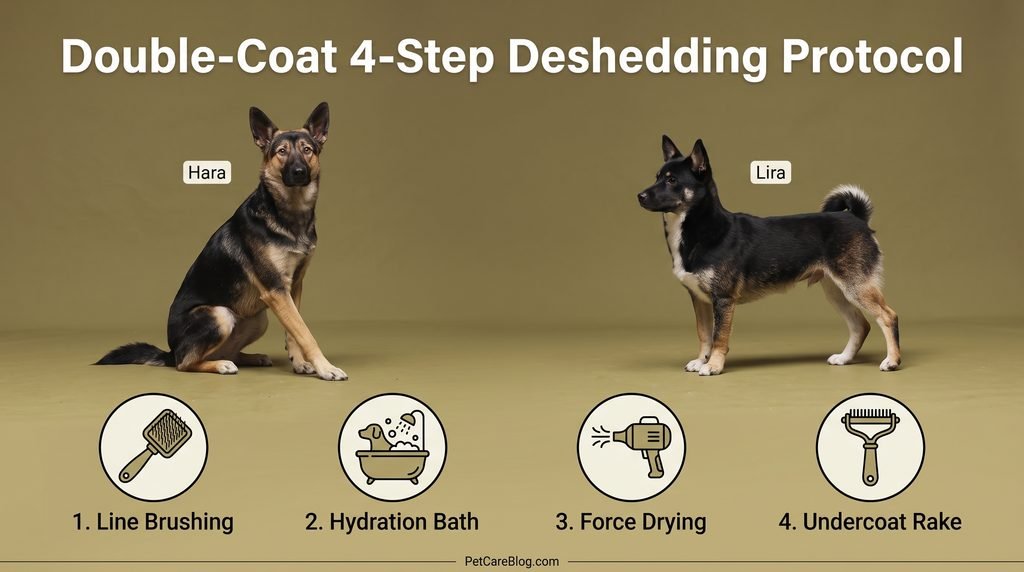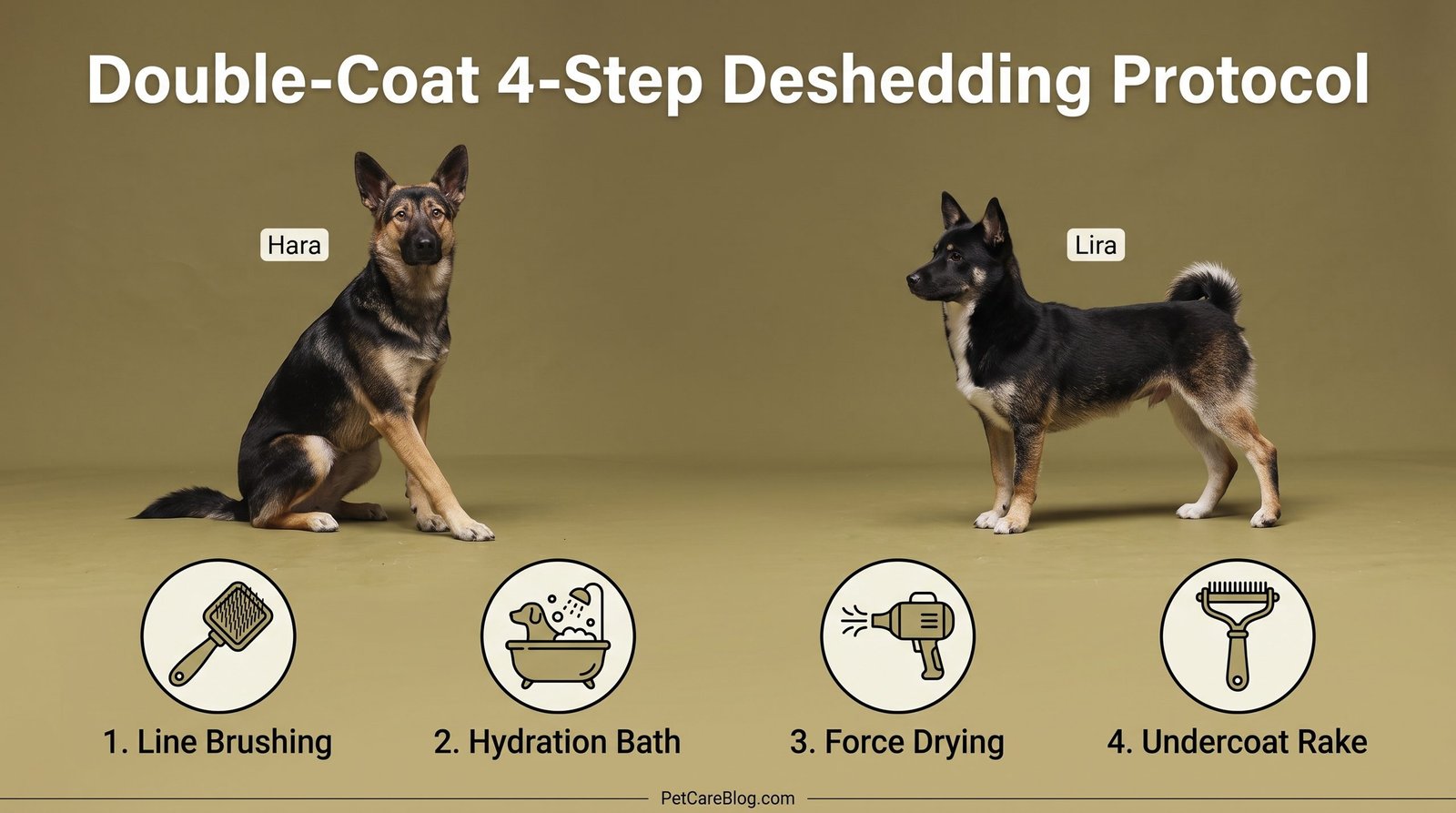
Learning how to deshed a double coated dog correctly is essential when vacuuming hardwood floors twice daily fails to resolve the relentless storm of flying undercoat. For athletic, double-coated canines—particularly shepherd mixes with strong native Spitz ancestry—the structural layering of dense wooly undercoat trapped beneath coarse guard hair presents a serious dermatological risk.
When trapped dead fur blocks cutaneous air circulation, it breeds hot spots, secondary bacterial folliculitis, and Malassezia dermatitis.
This technical guide breaks down a professional deshedding framework showing exactly how to deshed a double coated dog down to the skin barrier without degrading the natural insulating coat.
1. The Anatomy of Double Coats and the Fallacy of Shaving
A double coat is a biological thermal regulator engineered by evolution to insulate against freezing temperatures and shield against solar radiation. Misunderstanding its cellular architecture often leads to destructive grooming practices.
Guard Hairs vs. The Trapped Undercoat Matrix
- Guard Hairs (Primary Coat): Thick, pigmented, water-repellent strands with a protracted anagen (growth) cycle designed to deflect dirt, mechanical abrasion, and UV radiation.
- Undercoat (Secondary Fleece): High-density, fine, non-pigmented crimped hairs serving as thermal traps. During seasonal transitions, these hairs enter the telogen (shedding) phase en masse.
- Hypoxic Skin Microenvironment: Trapped shedding hair forms an impenetrable felt mat against the dermis. This barrier traps moisture and sebum while denying oxygen flow, creating an optimal incubation environment for opportunistic pathogens.
The Devastating Impact of Shaving Double-Coated Breeds
Clipping a double-coated dog down to the skin causes profound trauma to the follicular growth cycle. It frequently induces Post-Clipping Alopecia, leaving patches of skin bald or spurring patchy, wooly regrowth devoid of protective guard hairs.
Important: Shaving does not reduce shedding volume; it merely shortens the shed hair into sharp, irritating bristles while drastically increasing the dog’s vulnerability to sunburn, heat stroke, and secondary epidermal infections.
2. The 4-Tier Deshedding System: Sequential Release Protocol
Relying on standard pin brushes alone merely skims the surface. Eliminating dead undercoat demands a sequential mechanical and hydrodynamic release protocol.
| Stage | Operational Tool | Technical Purpose & Precautions |
|---|---|---|
| Phase 1: Dry Line Brushing | Firm Slicker Brush, Metal Comb | Part fur in horizontal layers. Lift surface debris and separate minor tangles before water exposure. |
| Phase 2: Hydration & Follicle Release | Amino-Acid Deshedding Shampoo & Conditioner | Bathe at 37°C to relax follicle collars. Cationic surfactants neutralize static electrical binding. |
| Phase 3: High-Velocity Kinetic Blowout | Canine Force Dryer (High Velocity / No Heat) | Blasts trapped undercoat straight out from the follicular base before hair completely dries. |
| Phase 4: Deep Undercoat Extraction | Undercoat Rake (Rotating T-Bar Teeth) | Clears remaining subterranean dead fur smoothly without cutting or stripping primary guard hairs. |
⚠️ Critical Safety Rule: Never apply high downward force when operating a slicker brush or deshedding blade over boney ridges (spine, hips, hocks). Repeated scraping over the same skin locus causes severe mechanical abrasion known as Brush Burn. Maintain a supple wrist action, guiding the tool strictly parallel to the direction of hair growth.
3. Follicular Anchorage: Nutritional and Environmental Support
Grooming addresses hair that has already loosened; systemic cellular nutrition dictates how well living follicles retain coat density before the telogen drop.
Sulfur Amino Acids and Marine Lipid Calibration
- Cysteine & Methionine: Keratin proteins require high bioavailable concentrations of sulfur-bearing amino acids. Prioritize animal-derived proteins—such as poultry, wild salmon, and clean organ meats—over plant grain fillers.
- Unoxidized EPA/DHA Omega-3: Marine triglycerides stabilize the stratum corneum and curb cutaneous histamine reactions. Dose approximately 300–500 mg combined EPA/DHA per 10 kg of body weight daily.
Environmental Hydration Targets
Forced indoor heating generates electrostatic charges, matting shedding hair into stubborn knots and driving trans-epidermal water loss. Maintain ambient home humidity consistently between 50% and 60% to fortify the dermal moisture barrier and minimize static friction.
Frequently Asked Questions (FAQ)
Q1. How do I choose between an undercoat rake and a bladed deshedding tool?
A: Always select a rotating-pin undercoat rake for coat preservation. Bladed deshedding tools utilize micro-serrated edges that cut through viable primary guard hairs instead of exclusively pulling loose undercoat, leaving the outer coat brittle, frayed, and dull over time.
Q2. Can I use a human hair dryer for a high-velocity blowout?
A: Absolutely not. Human hair dryers operate with high thermal heat and low air volume, which easily scorches canine epidermis and bakes damp tangles into tight mats. A dedicated canine high-velocity dryer uses high kinetic air volume at room temperature to physically blow water and dead fur out of the dermal bed safely.
A methodical grooming routine is active preventative healthcare that preserves skin homeostasis and deepens handler-dog communication. Allocate 15 minutes today to practice layered line brushing across the flank and hip zones.