Dog potty pad odor is rarely just the smell of fresh waste; it is the volatile byproduct of urea undergoing rapid bacterial decomposition into gaseous ammonia (NH3) and volatile organic compounds (VOCs) trapped in dead indoor air zones. Running air purifiers at maximum power or spraying chemical air fresheners merely desensitizes human olfaction while leaving uric acid crystals permanently embedded within flooring substrates. Neutralizing indoor odors while protecting canine respiratory systems requires combining enzymatic bio-breakdown chemistry with aerodynamic negative-pressure ventilation routines.
1. Biochemical Mechanisms of Potty Pad Odors and Air Stagnation
Canine urine is virtually sterile upon voiding, but the moment it meets ubiquitous environmental urease-producing bacteria, rapid degradation begins.
Enzymatic Ammonification and Heavy Gas Stratification
Urea (CO(NH2)2) breaks down into ammonia and carbon dioxide via bacterial urease. While pure ammonia gas is technically lighter than ambient air, high indoor relative humidity (>60%) causes ammonia molecules to bind to micro-water droplets. This forms a dense, heavy layer that stratifies 30 to 50 centimeters above the floor—right at canine respiratory height—causing chronic nasal mucosal inflammation and conjunctivitis.
Deep Capillary Penetration of Uric Acid Crystals
Even with regular pad disposal, lateral edge wicking and micro-splatter cause liquid urine to seep into subfloor seams, laminate joints, and tile grout. As moisture evaporates, insoluble uric acid crystals precipitate and tightly bond to the porous floor. Traditional wet mopping or basic bleach solutions cannot dissolve these crystal matrices, leading to perpetual off-gassing whenever humidity rises.
2. Source-Level Odor Management Solutions Compared
A scientific comparison of common cleaning methods and their biochemical efficacy in eliminating ammonia origins:
| Treatment Category | Active Agents / Mechanics | Ammonia Removal Chemistry | Limitations & Risks |
| Olfactory Masking | Synthetic aerosol sprays, essential oils | Masks malodor molecules with volatile perfumes | Ineffective neutralization; damages canine olfactory receptors |
| Oxidative Bleaching | Sodium hypochlorite (Bleach) | Oxidizes surface pigments and sanitizes | Reacts with ammonia to generate hazardous chloramine gas |
| Bio-Enzymatic Degradation | Protease, amylase, and uricase enzyme blend | Hydrolyzes insoluble uric acid crystal matrix | Requires contact dwell time (10–15 mins) to react |
| High-SAP Gel Matrix Pads | Super Absorbent Polymer + Activated Carbon | Rapidly cross-links urine into solid gel | Over-saturation causes reverse vapor discharge |
Mechanism of Multi-Enzyme Cleaners
Standard surfactants merely skim surface lipids without dissociating uric salts anchored inside micro-abrasions. Specialized pet enzymatic cleaners introduce targeted enzymes that hydrolyze peptide and amide bonds within uric acid, dissolving insoluble salts into water-soluble carbon dioxide and water for zero-residue evaporation.
Elevating Substrate Protection with Containment Trays
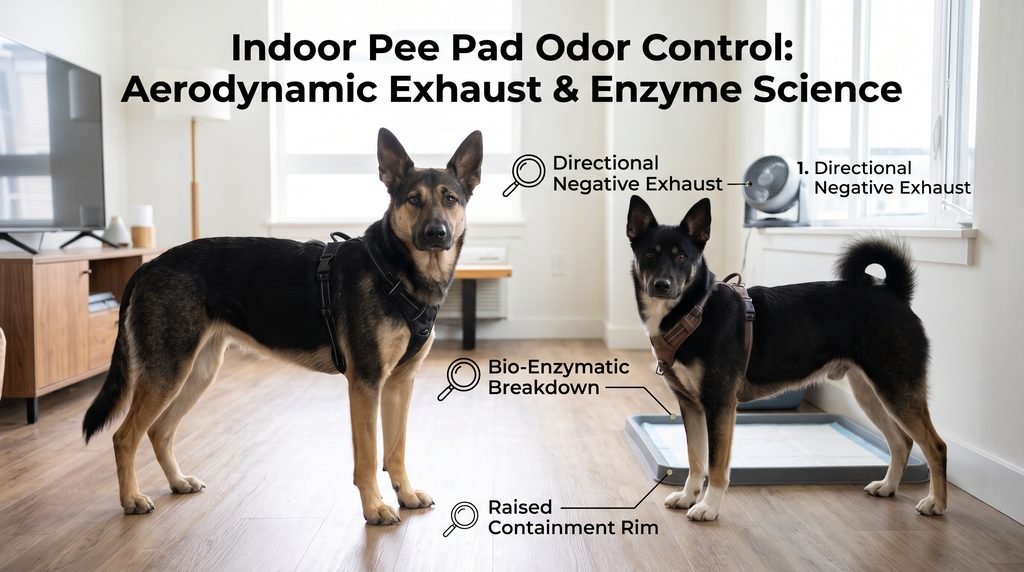
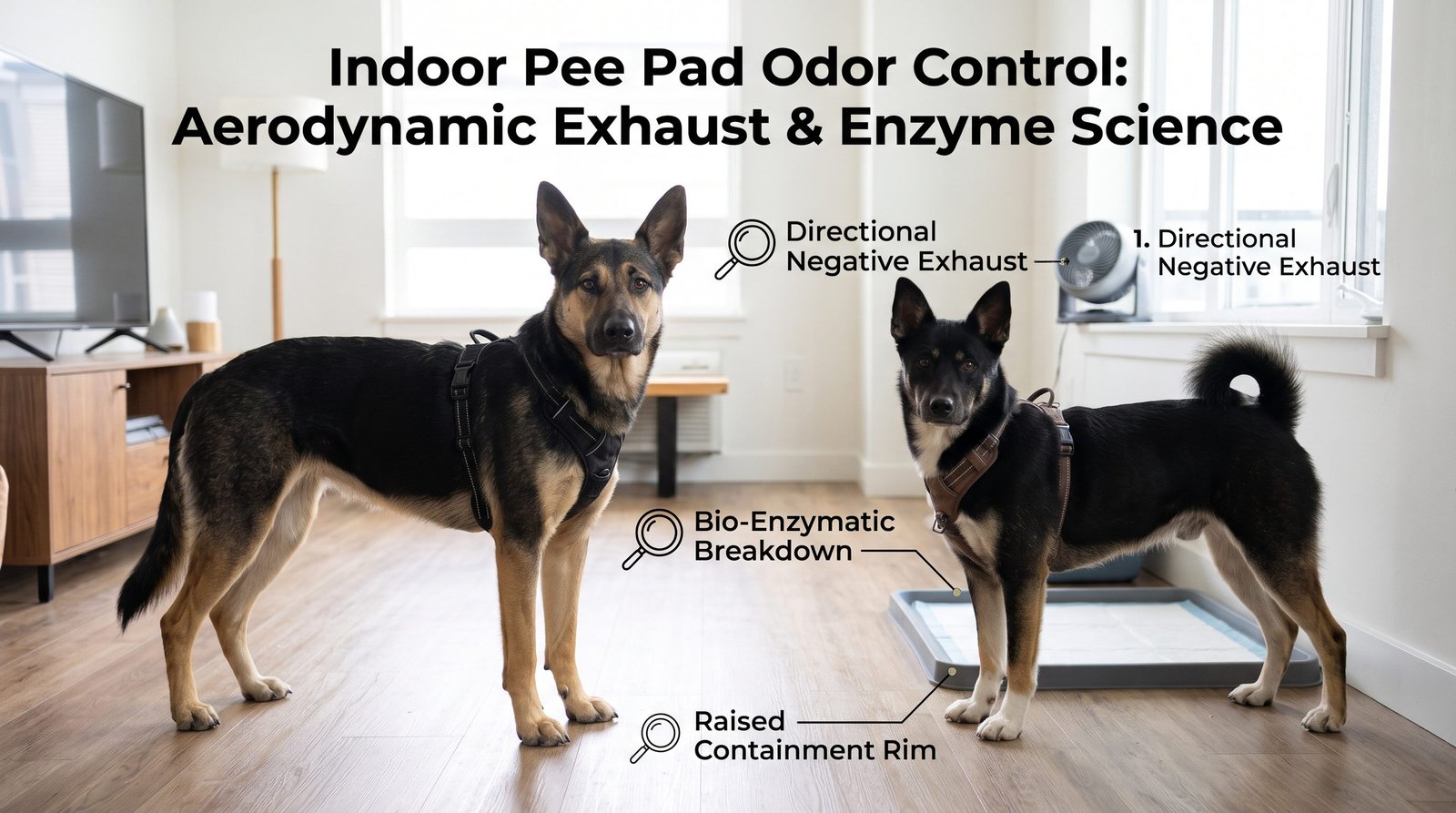
Pads resting directly on flooring suffer perimeter leakage from paw pressure. Handlers should implement silicone containment rims with minimum 2cm raised edges or medical-grade stainless steel trays. Lightly dusting baking soda beneath the pad creates a secondary dry buffer to absorb latent vapor.
3. The 3-Step Aerodynamic Negative-Pressure Ventilation Routine
Passive open-window ventilation frequently causes outdoor headwinds to drive concentrated potty odors back into main residential corridors. Handlers must systematically generate targeted negative air pressure.
Step 1: Placing Pads at the Exhaust Boundary
Never situate the potty station in central hallways or dead indoor corners. Place pads along exterior perimeter walls directly adjacent to the designated exhaust window. Ensure the pad sits directly below the air exit point rather than in the center of the intake pathway.
Step 2: Forced Directional Jet Exhaust via Air Circulators
Aerodynamic Protocol: Never point an air circulator into the room across the pad. Instead, aim the circulator directly out through the cracked window at a 45-degree upward angle. This forcefully expels the heavy lower gas layer, creating localized low pressure that pulls surrounding stagnant indoor air straight outdoors.
Step 3: Tri-Daily Cross-Ventilation Windows
Execute a 10-minute forced cross-breeze three times daily: immediately after morning wake-up, post-walk, and prior to bedtime. Crack intake and exhaust windows simultaneously while running floor-level fans to disrupt bottom-settled ammonia layers.
4. Deep-Cleaning Protocol for Subfloor Uric Acid Removal
- Direct Vertical Compression: Remove the soiled pad and immediately drop paper towels over the borders. Apply firm downward foot pressure to absorb lateral seepages without scrubbing (scrubbing forces urine deeper into floor pores).
- Enzymatic Saturation & Dwell: Spray an enzymatic cleaner generously over the footprint. Cover the damp area with plastic wrap for 10 minutes to prevent premature evaporation, allowing enzymes to digest crystal bonds.
- Citric Acid Neutralization Rinse: Wipe clean, then mist with a mild acidic solution (1 tsp citric acid in 500ml warm water) to neutralize lingering alkaline ammonia salts before drying completely.
Frequently Asked Questions (FAQ)
Q1. Why is cleaning dog urine with household chlorine bleach dangerous?
Mixing chlorine bleach (sodium hypochlorite) with the ammonia in pet urine sparks a rapid chemical reaction producing toxic chloramine vapors (NH2Cl). Inhaling chloramine inflames respiratory airways, causing severe coughing, watery eyes, and lung tissue damage in both dogs and humans.
Q2. Are carbon-infused charcoal pee pads genuinely more effective?
Yes. Activated charcoal possesses massive internal surface porosity that physically binds airborne volatile odor molecules through adsorption. However, charcoal pores have an absorption ceiling; pads must still be changed every 2 to 3 voids to prevent saturated carbon from releasing trapped gases.
Effective indoor odor management replaces superficial perfume masking with bio-enzymatic breakdown and engineered airflow dynamics. By combining targeted enzymatic surface decontamination with forced-exhaust ventilation routines, you can preserve pristine indoor air quality and protect your dog’s sensitive olfactory health.
Meta Description:
Master indoor dog pee pad odor control. Learn uric acid enzymatic breakdown science, forced-exhaust window ventilation routines, and safe floor decontamination protocols.