As seasonal coat-blowing begins, households with double-coated dogs find themselves under an avalanche of shedding fur. While the outer guard coat looks dense and healthy, dead, non-follicular undercoat builds up silently beneath the surface, blocking natural airflow to the skin and creating a prime environment for dermatological infections.
Merely brushing the surface does nothing to relieve this compacted undercoat. Worse, improper use of undercoat rakes and de-shedding tools can scrape, lacerate, or irritate your dog’s sensitive skin. This clinical guide provides a biomechanically sound, skin-safe protocol for using an undercoat rake to clear out dead fur without damaging the protective topcoat or causing discomfort.
1. Undercoat Blow Biomechanics and the Dangers of Neglect
Double-coated breeds possess a harsh, water-repellent outer guard coat over a dense, soft insulating undercoat. During spring and fall seasonal transitions, the undercoat detaches in massive waves—commonly called “blowing the coat.”
Pathological Consequences of Compacted Undercoat
| Complication | Cause | Primary Symptoms | Preventive Action |
| Loss of Skin Ventilation | Shed hair traps moisture and natural sebum, forming a felted “mat” close to the dermis. | Acute moist dermatitis (hot spots), folliculitis, yeast overgrowth | Rake the coat 2–3 times weekly to restore airway pathways. |
| Impaired Thermoregulation | Un-shed undercoat acts as heavy, damp insulation, trapping heat in summer and moisture in winter. | Increased panting, lethargy, skin itching | Target the undercoat to encourage natural air circulation. |
| Severe Friction Matting | Loose hairs collect in high-friction areas like the armpits, ears, and groin. | Gait restriction, skin pulling, pain | Routine pre-grooming with a slicker brush to remove tangles. |
Veterinary Insight: Shaving a double-coated dog with clippers in an attempt to curb shedding is highly counterproductive. Stripping the natural guard coat exposes delicate skin to sunburn, invites insect bites, and can trigger “post-clipping alopecia”—where the undercoat grows back patchy, sparse, or fails to return at all. The goal should be to extract the dead undercoat while keeping the outer coat fully intact.
2. Choosing and Handling an Undercoat Rake
An undercoat rake is the only specialized manual tool capable of sliding through the topcoat to catch and pull loose undercoat without cutting the guard hair.
- Pin Length and Geometry: Choose a rake with pins long enough to reach your dog’s specific skin depth. For very dense coats, dual-row, staggered-length pins are most effective. Always verify that the pin tips are smooth and rounded (safety-ground) to prevent scratching.
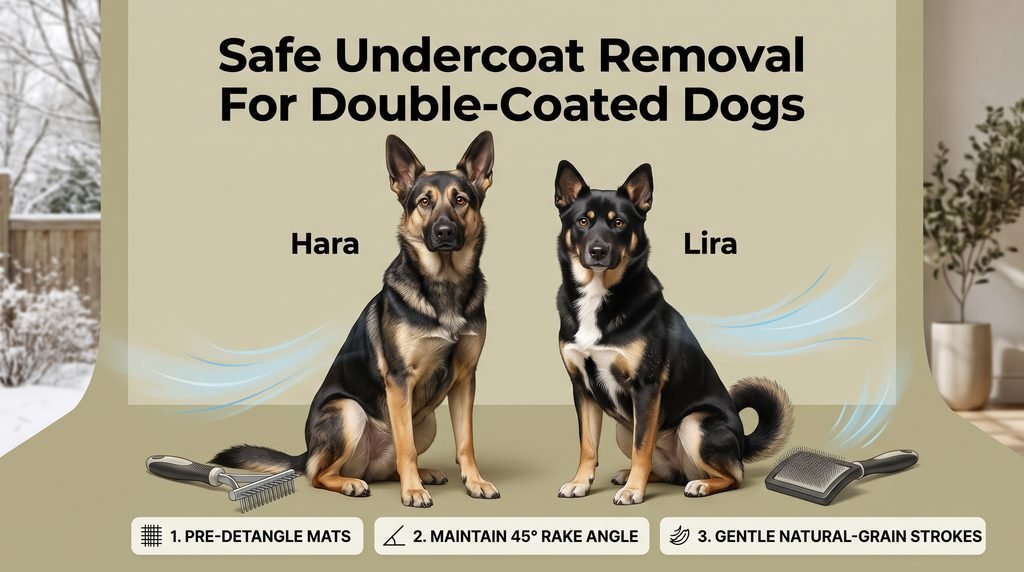
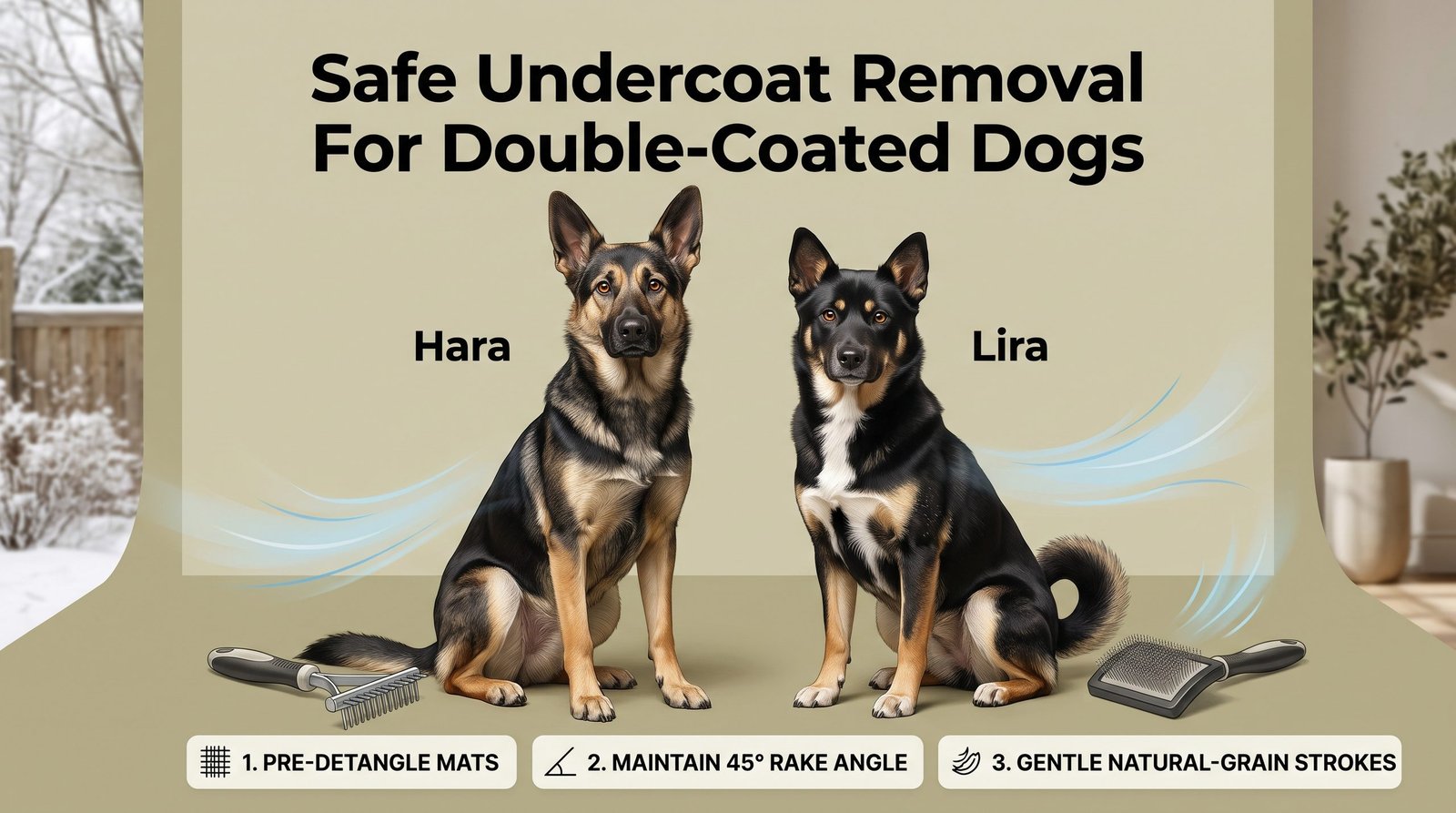
- The 45-Degree Angular Rule: Never hold the rake perpendicular (90 degrees) to the dog’s skin, as this directs sharp pin forces into the dermal layer. Tilt the rake slightly backward (approx. 45 degrees), allowing the curved teeth to pass safely through the hair while gently lifting loose undercoat.
- Pressure Regulation: Let the natural weight of the metal tool do the work. Avoid pressing downward or applying force. If you feel resistance or a knot, stop immediately. Tugging hard strains the skin, causing micro-abrasions and training the dog to fear and resist the grooming process.
3. Four-Step Skin-Safe De-Shedding Protocol
Efficient and stress-free undercoat removal requires a careful, methodical workflow.
- Step 1: Inspect and Detangle (Pre-Grooming Check)
- Visually scan and feel your dog’s body for scratches, hotspot lesions, or insect bites. Do not groom over broken skin.
- Spritz the coat with an anti-friction detangling spray. Gently work a slicker brush or pin brush over the coat to free up any superficial tangles before using the heavy rake.
- Step 2: Section and Gentle Stroking (Line Raking)
- Work in sections. Gently lift a section of fur with your non-dominant hand to expose the skin, and stroke downward in small, targeted areas.
- Always rake in the natural direction of hair growth. Use short, smooth, gentle strokes rather than pulling across long expanses of the body.
- Step 3: Ease Around Sensitive Areas
- The groin, behind the ears, the armpits, and the rear hocks have highly elastic, thin skin. Skip the heavy-handed use of a rake here; instead, use a fine comb or your fingers to ease out tiny tangles.
- Step 4: Confirm and Cool Down
- Run a steel comb down to the skin level. If it moves through freely without catching, the dead undercoat has been successfully cleared.
- Finish by spritzing a natural, lightweight leave-in conditioner or skin-calming mist to rehydrate the skin and soothe the hair follicles.
Frequently Asked Questions (FAQ)
Q1. Can I use an undercoat rake daily during peak shedding season?
Using a rake every day can cause friction damage to the skin and break the healthy guard coat. Even during a heavy seasonal blow, limit deep raking to 2–3 times a week, keeping sessions to 15–20 minutes. Daily care is better done with a gentle slicker or pin brush to catch loose surface fluff.
Q2. Should I brush before or after a bath?
Always brush and rake before a bath. Bathing an unbrushed, impacted coat will lock the tangles, making them almost impossible to remove without cutting once wet. Pre-walk or pre-bath deshedding loosens the bulk; follow with a thorough bath and high-velocity blowout (if available) to clear the rest, then do a quick final brush once the dog is 100% dry.
Handling seasonal shedding does not require aggressive clipping or endless struggle. By selecting the right tools, maintaining a relaxed 45-degree angle, and focusing on gentle, section-by-section care, you can preserve your double-coated dog’s natural insulation while keeping their skin healthy, aerated, and comfortable.
Meta Description
A comprehensive guide to managing seasonal shedding in double-coated dogs using undercoat rakes, featuring tool choices, skin-safe angles, and a step-by-step de-shedding process.