When evaluating panosteitis vs infection in dogs, sudden lameness paired with a loss of appetite and warmth to the touch presents an agonizing dilemma for pet owners. Is this simply painful discomfort from canine “growing pains” (panosteitis), or does it signify an aggressive systemic infection such as septic arthritis, bone marrow inflammation, or a viral crisis? In growing puppies aged 5 to 18 months, inflammatory bone changes can occasionally trigger a mild transient fever and reluctance to move, closely mimicking early-stage infectious diseases.
However, mistaking an acute bacterial or viral infection for a self-limiting developmental condition can have devastating consequences, including joint destruction, septic shock, and multi-organ failure. This guide provides an evidence-based differential protocol: comparing core physiological parameters, evaluating critical red flags, and outlining the exact clinical response needed during the golden window of presentation.
1. Core Temperature & Appetite Dynamics: The Pathophysiological Divergence
A healthy canine rectal temperature sits strictly between 38.0°C and 39.2°C (100.4°F – 102.5°F). Differentiating non-infectious, sterile bone inflammation from systemic immune activation begins with evaluating the exact degree of pyrexia and the nature of the puppy’s anorexia.
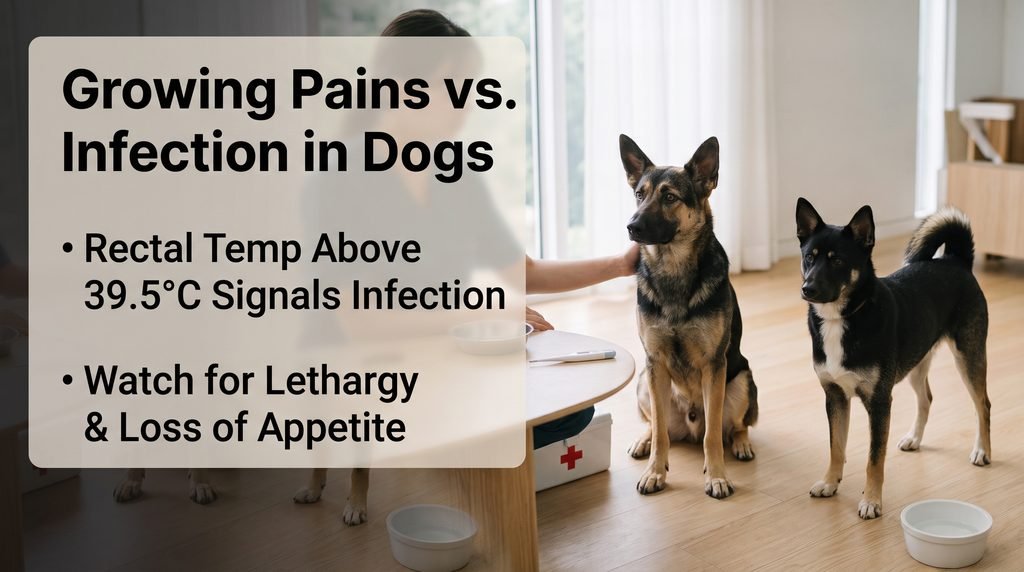
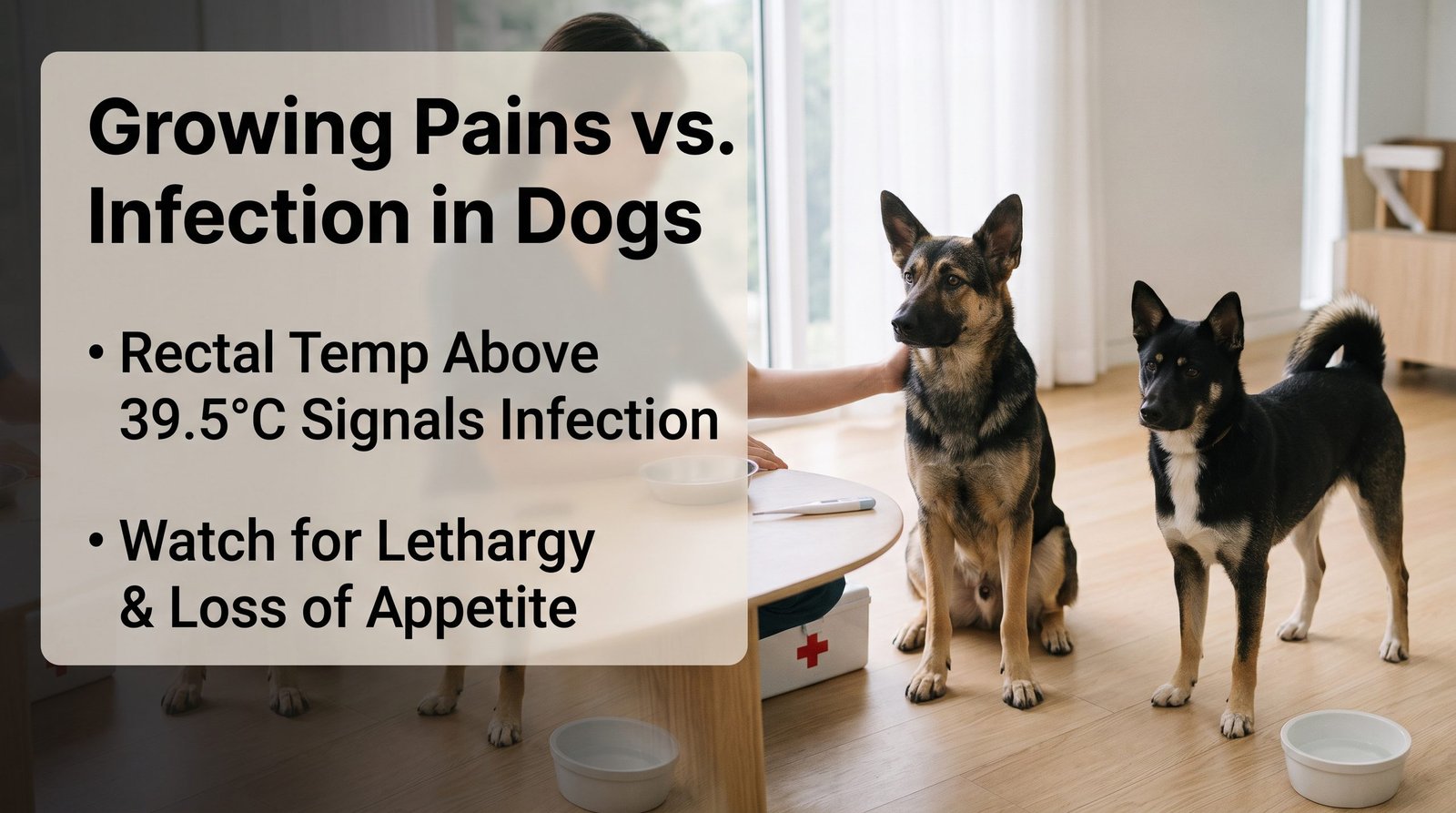
① The 39.5°C (103.1°F) Threshold: Low-Grade Warmth vs. True Hyperthermia
- Panosteitis (Growing Pains): Local vascular congestion within the medullary cavity and periosteal inflammation can cause low-grade physiological warmth, typically hovering between 38.8°C and 39.3°C. It rarely breaches the 39.5°C threshold.
- Infectious Diseases (Bacterial Osteomyelitis, Septic Arthritis, Systemic Viruses): Pathogen-derived pyrogens trigger the hypothalamus to dramatically elevate the body’s set-point, driving rectal temperatures above 39.5°C, often escalating to 40.5°C (105°F). Intense localized heat over joints and panting are hallmark presentations.
② Pain-Induced Inappetence vs. Toxin-Driven Anorexia
- Panosteitis Inappetence: The puppy hesitates to stand and walk to the food station because bearing weight on the long bone causes sharp pain. However, when highly palatable food is brought directly to their mouth, they readily consume it with enthusiasm. Gastrointestinal processing remains entirely intact.
- Infectious Disease Anorexia: Circulating endotoxins and systemic inflammatory cytokines directly depress the central nervous system and disrupt gastric motility. The animal exhibits complete food aversion, actively turning away from high-value meats and refusing water entirely.
2. Differential Diagnostic Matrix: Panosteitis vs. Infectious Orthopedic Conditions
Combining physical palpation findings with systemic clinical signs provides the definitive criteria needed to rule out serious pathology.
| Diagnostic Marker | Canine Panosteitis (Growing Pains) | Infectious / Septic Pathology |
| Rectal Temperature | Normal to transient mild fever (<39.3°C) | Sustained high-grade fever (>39.5°C / 103.1°F) |
| Pain Localization | Firm pressure over the mid-shaft (diaphysis) of the bone | Joint effusion, periarticular swelling, and localized heat |
| Lameness Pattern | Migratory (“shifting-leg” pattern across limbs) | Fixed to one site, progressively worsening without relief |
| GI Complications | Absent; stool quality and digestive tract are normal | Frequent vomiting, foul mucoid diarrhea, or melena |
| Mucous Membranes | Healthy pink; Capillary Refill Time (CRT) < 2 seconds | Pale, tacky, gray, or injected hyperemic brick-red |
| Mental Demeanor | Alert; engages mentally while resting | Profound stupor, depression, unresponsiveness to owners |
3. Essential At-Home Response and Safety Protocol
If you observe an elevated temperature paired with acute lethargy and inappetence, follow these non-negotiable guidelines before your veterinary evaluation.
① Accurate Rectal Thermometry Technique
Axillary (armpit) or superficial ear readings are notoriously inaccurate in canines, often deviating by 1.0°C or more.
- Apply a water-soluble lubricant or petroleum jelly to the tip of a flexible digital thermometer.
- Elevate the tail gently and insert the probe 2 to 3 centimeters into the rectum.
- Angle the probe slightly so it maintains contact with the rectal wall rather than fecal matter until the reading completes. If the reading exceeds 39.5°C, contact an emergency hospital immediately.
② Hydration Assessment: The Skin Turgor Test
Gently lift the skin over the puppy’s shoulder blades and release it. In a well-hydrated dog, the fold snaps back flat instantly. If it remains tented or recoils slowly, the puppy is experiencing systemic dehydration. Never force-syringe water into the throat, as this can trigger aspiration pneumonia; instead, offer small licks of water or ice cubes.
③ Absolute Warning: Never Administer Human Analgesics
Never give human medications such as acetaminophen (Tylenol), ibuprofen (Advil), or naproxen to reduce a fever. In canines, these substances cause acute hepatic necrosis, severe gastrointestinal ulceration, and fatal methemoglobinemia within hours. Fever reducers must only consist of veterinary-prescribed NSAIDs formulated specifically for dogs.
FAQ: Frequently Asked Questions
Q1. Should I force-feed my puppy if they skip meals due to leg pain?
No. Forcing food can induce nausea and food aversion. If the anorexia is strictly due to panosteitis pain, bringing their normal meal directly to their bed or warming a small amount of wet food will usually stimulate eating. If they refuse all food for more than 12 hours, a clinical blood panel is required to check for underlying infection.
Q2. Can I use cold ice packs if my dog has a fever?
Do not use freezing ice or cold baths. Severe cold causes peripheral vasoconstriction, trapping core body heat and triggering shivering that paradoxically raises the internal temperature further. Dampen a towel with lukewarm water and gently wipe their paw pads, groin, and abdomen to facilitate gentle evaporative cooling.
Conclusion & Action Steps
A limping puppy who seems mildly sluggish might simply be navigating a painful flare-up of developmental panosteitis. However, the presence of a sustained fever over 39.5°C, complete food rejection, and true systemic lethargy crosses the line from growing pains into an infectious medical emergency. Do not guess or wait. Measure their rectal temperature, avoid dangerous human medications, and seek professional veterinary diagnostics—including complete blood counts (CBC) and targeted radiographs—to protect your dog’s long-term mobility and life.
- Meta Description: Is your limping puppy showing a fever and loss of appetite? Learn the clinical differences between puppy growing pains (panosteitis) and dangerous infections, with essential temperature benchmarks and safety rules.