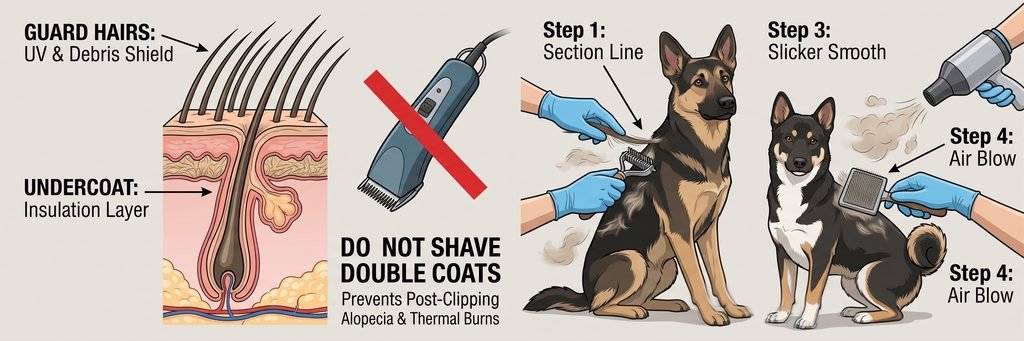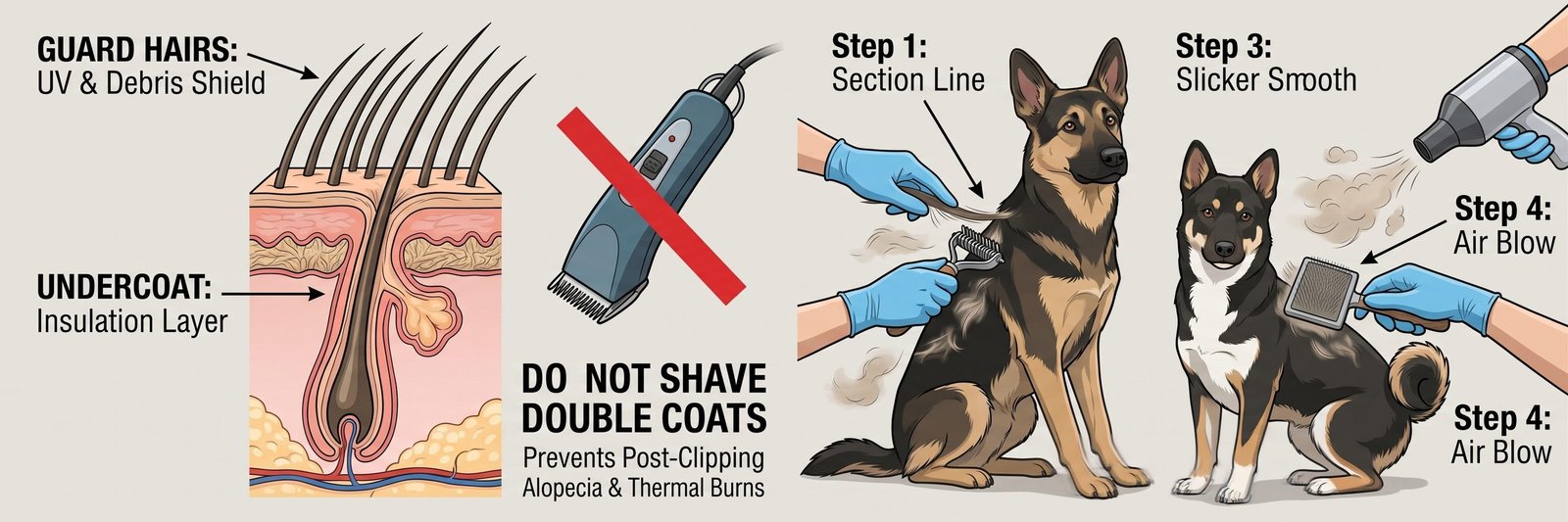
Shaving double-coated dogs is a dangerous practice that permanently damages their coat and thermal defense. A canine coat is not an aesthetic accessory; it is an indispensable physiological barrier shielding skin integrity and metabolic equilibrium. Double-coated breeds—including German Shepherds, Shibas, Spitz-type breeds, and their crossbreeds—possess a dual-layered coat architecture operating as a natural thermodynamic regulator. Shaving these dogs with clippers under the mistaken assumption of cooling them during summer compromises their innate thermoregulatory capacity, inducing photodermatitis from ultraviolet radiation and triggering severe follicular arrest known as post-clipping alopecia. The only scientifically validated solution for thermal comfort and dermatological protection is not shaving, but the mechanical extraction of dead undercoat hairs to establish convective airflow.
1: Biophysics of Double Coats and the Pathology of Shaving
Double-coated breeds exhibit structural characteristics distinct from single-coated dogs. Mechanical shaving fundamentally destabilizes this dermal ecosystem.
1-1: Biomechanical Interaction: Guard Hairs vs. Undercoat
- Dual-Layer Defense Architecture: The stiff, weather-resistant outer guard hairs repel water, environmental debris, insects, and ultraviolet rays. Beneath them lies the dense, plush undercoat, which traps dead air to form an insulation layer. In winter, this layer preserves basal core heat; in summer, it prevents external ambient thermal radiation from reaching the dermis.
- Failure of Thermal Shielding: Clipping the coat down to the dermal layer exposes unprotected skin directly to solar irradiance. This induces rapid spikes in skin temperature, multiplying heat stroke susceptibility and elevating risks of solar dermatitis and squamous cell carcinoma.
1-2: Pathogenesis of Post-Clipping Alopecia
The heat and vibration of clippers, coupled with vascular constriction around sheared follicles, disrupt the standard follicular chronobiology.
- Follicular Arrest (Telogen Phase Locking): Sheared follicles fail to cycle back into the anagen (growth) phase, remaining dormant in an extended telogen state. Consequently, coat regrowth ceases entirely for months or years, leaving irregular, patchy alopecic lesions.
- Dysplastic Regrowth (Woolly Coat Syndrome): Even when regrowth occurs, undercoat follicles often reactivate prematurely while guard hair follicles remain dormant. This results in dull, tangled, wool-like fluff that mats instantly, completely neutralizing cutaneous respiration.
2: Grooming Tool Selection and Application Matrix
Proper management relies on specialized deshedding tools engineered to dislodge shedding undercoat without cutting protective outer guard hairs.
| Tool Classification | Mechanism & Primary Target | Application Cadence | Cutaneous Safety Guidelines |
| Undercoat Rake | Extracts dead undercoat without severing outer hairs | 2–3 times weekly (shedding season) / Weekly (off-season) | Maintain a 45-degree angle; do not drag pins against bare skin |
| Soft Slicker Brush | Untangles outer guard hairs and smooths coat plane | 3–4 times weekly | Use a light wrist-flick technique; avoid pressing pins into the dermis |
| Deshedding Blade | Gathers loose undercoat and thins compact mats | Bi-weekly (strictly limited) | Maximum 3 passes over the exact same area to avoid guard hair shearing |
| High-Velocity Dryer | Pneumatically propels shed undercoat and dander free | Post-bath requirement | Use ambient/cool air settings only; avoid direct aim into eyes and ears |
Veterinary Practice Note: Excessive dry brushing induces epidermal friction burns and folliculitis. Lightly mist the coat with a protein-conditioning or detangling spray before grooming to reduce the coefficient of friction.
3: The 4-Step Scientific Line Brushing & De-Shedding Protocol
This non-invasive protocol evacuates trapped undercoat, maximizing skin aeration and reducing thermal burden without compromising coat architecture.
- Sectioning and Line Identification (Line Brushing): Begin at the densest anatomical regions, such as the hips or cervical base. Using your non-dominant hand, push the coat upward against the direction of hair growth until a clear line of skin is exposed.
- Deep Raking of Shed Undercoat: Position the undercoat rake right along the revealed skin line and stroke downward along the natural direction of growth. Allow the curved teeth to capture shed undercoat plugs. If mechanical resistance is encountered, pause and gently work through the knot from tip to root.
- Slicker Alignment and Detangling: Follow the rake with smooth passes of a soft slicker brush. This aligns the guard hairs and clears loose fragments, eliminating the dense felted matting layer that blocks surface airflow.
- High-Velocity Pneumatic Flushing (Aero-Flushing): Utilizing the sheer kinetic force of a high-velocity forced-air dryer, flush the base of the coat. This propels stubborn micro-hairs and dead squames away from follicular ostia, restoring natural transdermal gas exchange.
Frequently Asked Questions (FAQ)
Q1. My dog pants heavily during hot weather; wouldn’t leaving 1 cm of hair be cooler?
No. Shaving an animal with a double coat degrades both guard hairs and undercoat, eliminating the thermodynamic barrier. Once sheared, the skin absorbs ambient solar heat by direct contact, accelerating internal heat accumulation. The most effective way to cool the dog is to thoroughly deshed the undercoat, establishing internal micro-channels that permit evaporative cooling.
Q2. My dog was shaved months ago and the coat has not regrown. How can this be corrected?
If post-clipping alopecia is suspected, halt all clipping immediately. Supplementation with marine-derived Omega-3 fatty acids, systemic melatonin therapy (under veterinary guidance), and gentle circulatory dermarolling or thermal therapies can encourage follicular reentry into anagen. A formal veterinary evaluation is advised to rule out hypothyroidism or hyperadrenocorticism.
Q3. What happens if dead undercoat is left unmanaged during seasonal shedding?
Unshed undercoat traps moisture, sebum, and exfoliated corneocytes, forming a dense, felt-like barrier. This suffocates the skin, triggering acute moist dermatitis (hot spots) and fostering ideal niches for bacterial and parasitic colonization.
A double coat is not an unbearable summer burden, but an evolutionary masterpiece of bi-directional insulation. Preserve follicular health and support true thermal regulation through systematic line brushing.
- Meta Description: The physiological dangers of shaving double-coated dogs and post-clipping alopecia pathophysiology. A 4-step line brushing and undercoat deshedding protocol.