Learning how to calm dog before walks is essential for every pet parent facing front door chaos. We all dream of peaceful outdoor adventures with our dogs, but the pre-walk frenzy—running around the house, barking, or lunging at the front door before you even step outside—can leave any owner exhausted before the walk even begins.
This excessive excitement, triggered the moment you reach for the leash, isn’t just “happy” behavior. It is a major cause of leash pulling, reactivity toward other dogs, and unpredictable behavior outside. To ensure a safe, calm outing, you must first master the front door routine to calm your dog before a walk.
1. Why Pre-Walk Overexcitement is Dangerous (and Why Doorway Waiting Matters)
Many owners dismiss a dog’s frantic doorstep behavior as simply being eager to go out. However, stepping outside when adrenaline and cortisol (the stress hormone) are already peaking makes your dog significantly more reactive to minor outdoor stimuli like passing bikes, other dogs, or sudden noises.
- Transfer of Arousal: High arousal indoors translates directly to high arousal outdoors. Starting the walk with a calm, regulated nervous system is essential for your dog to process environmental triggers without reacting.
- Conditioned Reward Regulation: Dogs experience an instant dopamine surge when they see walk cues (leash, harness, shoes). Opening the door while they are barking or jumping reinforces the wrong lesson: “Getting frantic gets me outside.” They must learn that calm stillness is the only key that unlocks the door.
- Safety and Control: Bolting through an open doorway creates immediate risks—collisions in hallways, leash tangles, or darting straight toward the street. A solid impulse-control boundary at the door is a non-negotiable safety behavior.
| Trigger Stage | Canine Mental State | Common Mistake | Calm Alternative |
|---|---|---|---|
| Stage 1: Leash / Gear | Dopamine rush; pacing, whining, jumping | Attaching gear while dog is frantic | Wait motionless; clip leash only when all four paws are grounded |
| Stage 2: Moving to Door | Lunging forward, scratching at trim | Rushing forward to “just get out” | Pause 4–5 feet back; ask for a sit and eye contact |
| Stage 3: Opening Door | Shoving head into gap, ready to bolt | Letting dog pull owner through | Instantly shut the door if hips lift before release cue |
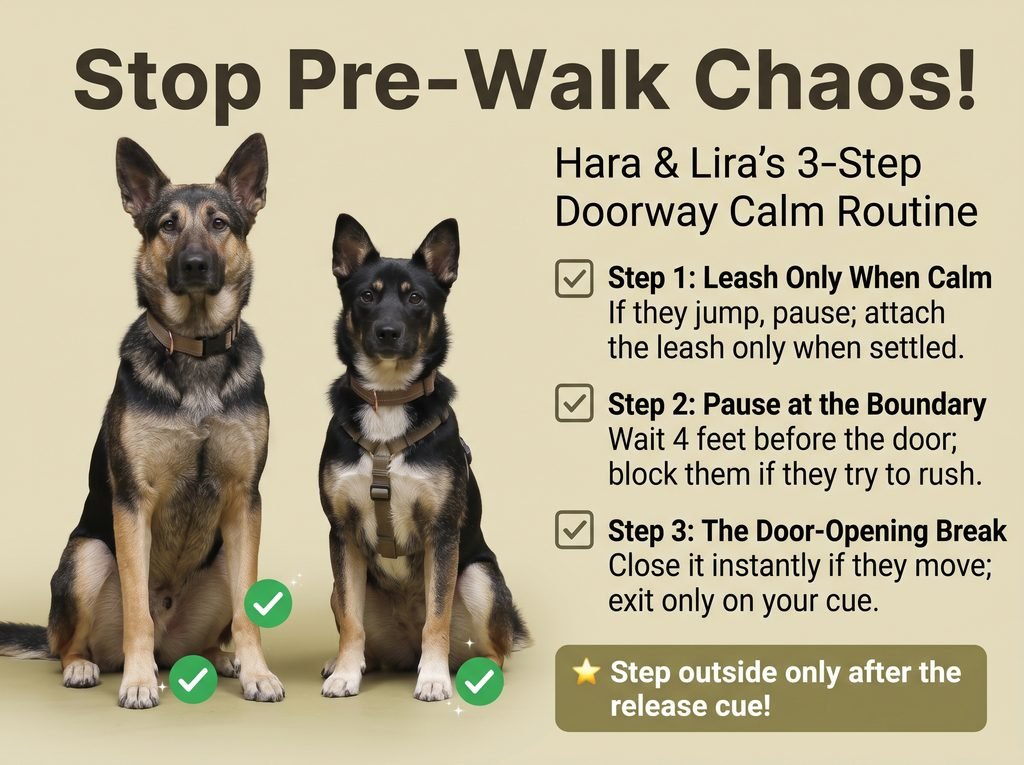
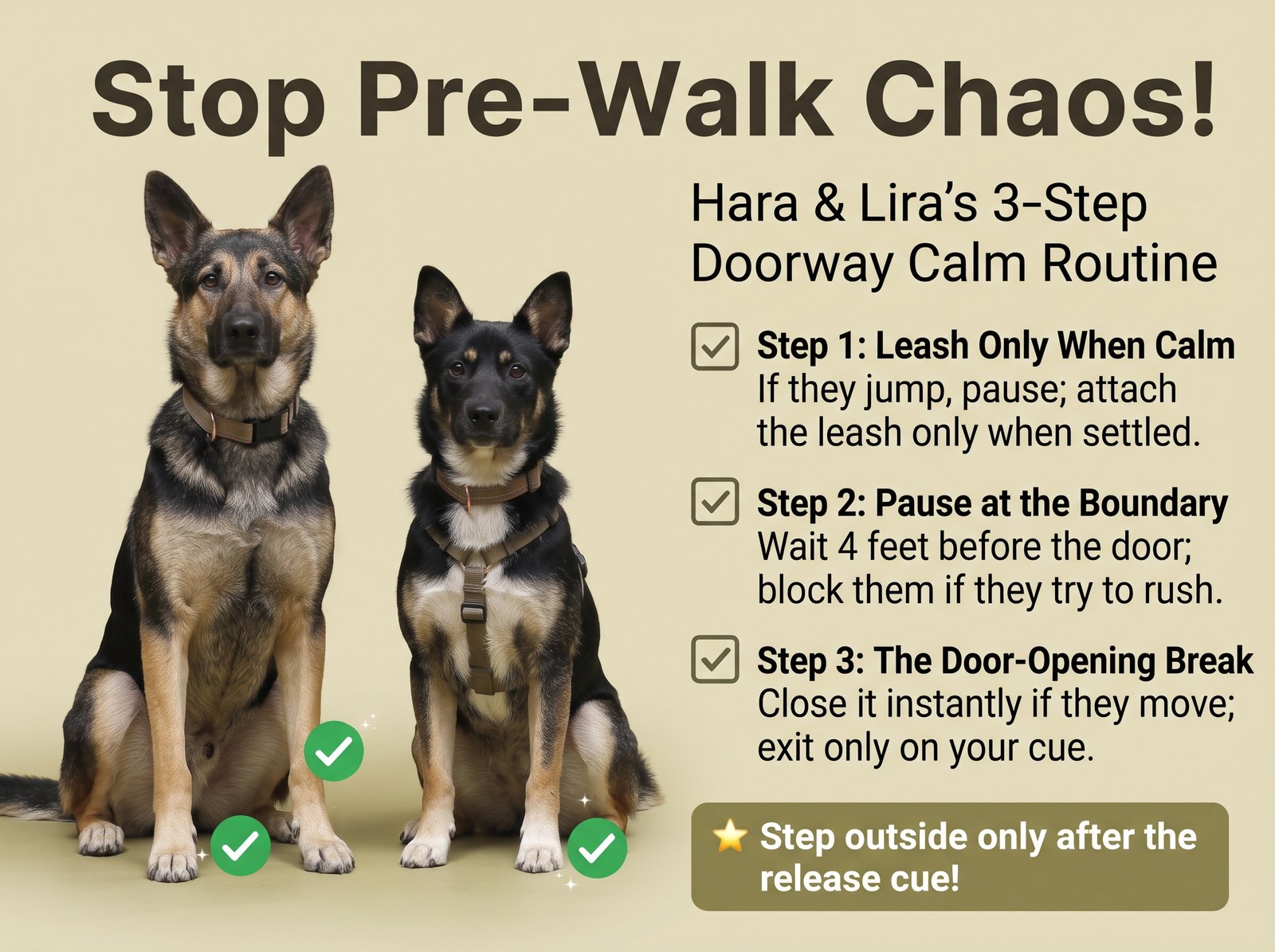
2. The 3-Step Routine to Calm Your Dog Before Walks
This training relies on environmental feedback, not repeated verbal commands. Your physical actions teach your dog that walk progression only happens when they are calm.
Step 1: De-escalate the Leash Trigger (Indoor Baseline)
If your dog starts spinning, jumping, or whining the moment your hand touches the leash, immediately put it back down, step away, and sit on the couch or return to your routine.
- How to apply: Repeat this sequence 5 to 10 times daily without leaving the house. Once the leash loses its predictive power as an instant ticket outside, the dopamine spike flattens. Only snap the leash onto the collar or harness when your dog sits quietly and offers calm eye contact.
Step 2: Establish the “Boundary Zone” (4–5 Feet Back)
Never let your dog crowd the door frame. Create a visible threshold 4 to 5 feet back from the entryway (e.g., where hardwood meets tile, or a designated mat).
- How to apply: Guide your dog to sit at this boundary. If they creep forward as you approach the doorknob, use your body (gentle body blocking) to claim the space and guide them back behind the line. Keep your hand off the handle until their rear stays firmly planted on the floor.
Step 3: The “Door-Break” Impulse Test
The physical door itself acts as the ultimate filter for impulse control.
- How to apply:
- Turn the knob and crack the door open just 1 to 2 inches.
- If your dog twitches forward or lifts their hips, immediately close the door firmly (watch the paws and nose). Do not scold, yell, or say “no.” Let the door’s closure communicate the rule: Moving forward ends the opportunity.
- Once the door is fully open, step through first while your dog remains seated inside.
- Release them with a clear verbal cue like “Free” or “Let’s go” before letting them cross the threshold.
3. Long-Term Strategies to Lower Walk Excitement
- Desensitize Daily Gear: Put on your walking jacket while washing dishes, or leave the leash around your neck while working at your desk. Breaking the rigid association stops anticipation from building into frantic arousal.
- Reward Calm Eye Contact: Before opening any barrier, hold out for deliberate eye contact rather than frantic staring at the doorknob. Looking at you shifts their brain from reactive drive to cooperative focus.
- Drain Frenetic Energy First: If your dog has been crated or idle all day, expecting instant stillness is unrealistic. Run a 3-minute indoor tug session or scatter kibble on a snuffle mat to burn off initial surface tension before practicing the threshold.
Frequently Asked Questions (FAQ)
Making my dog wait at the door seems harsh. Shouldn’t walks be fun?
Frantic arousal is rooted in hyper-vigilance, not pure joy. A dog leaving the house in an overstimulated state experiences elevated stress markers, making them significantly more prone to fear-based barking and lunging. A calm threshold allows them to sniff, decompress, and actually enjoy the environment.
What if my dog keeps trying to bolt every single time the door cracks?
You have raised the criteria too quickly. Break the step down further: practice making the sound of the deadbolt clicking, or turning the knob without opening the door. Reward them for staying seated during the noise alone before adding visual exposure to the outside world.
Will this routine help stop leash pulling once we are on the sidewalk?
Yes. Outdoor pulling almost always starts at the threshold. A dog that leaves the doorway at an arousal level of 80% to 90% has no emotional buffer left when encountering squirrels, cars, or other dogs. Starting the walk at a baseline of 15% gives them the mental regulation needed to walk on a loose lead.
Silence your vocal corrections, establish firm physical boundaries, and let the door do the teaching. Practicing this 3-step calm routine consistently will turn frantic departures into relaxed, structured outings.
Meta Description:
Master the 3-step front door routine to calm your dog before walks and stop frantic leash pulling. Learn how to manage pre-walk arousal for safer, happier outings.