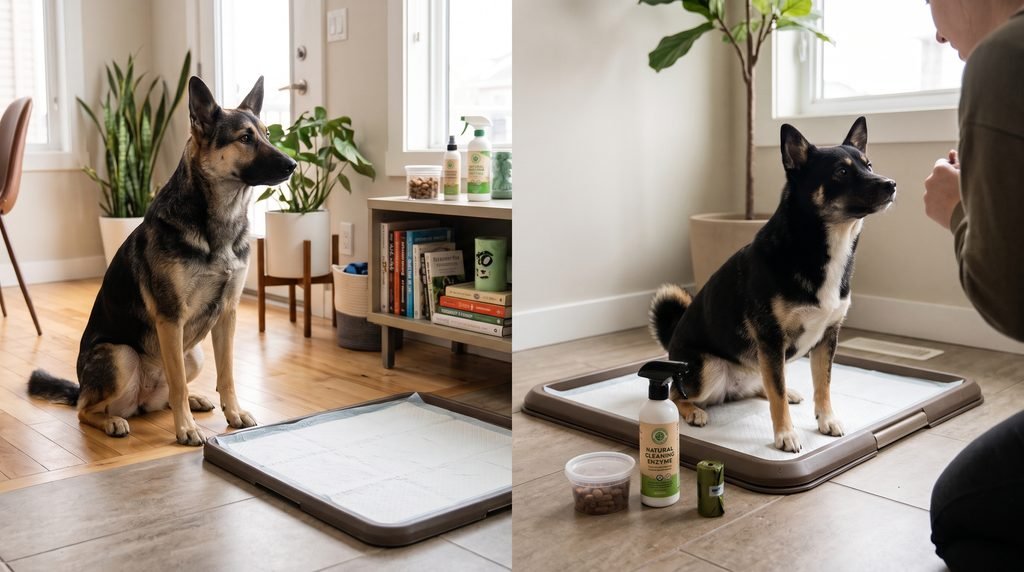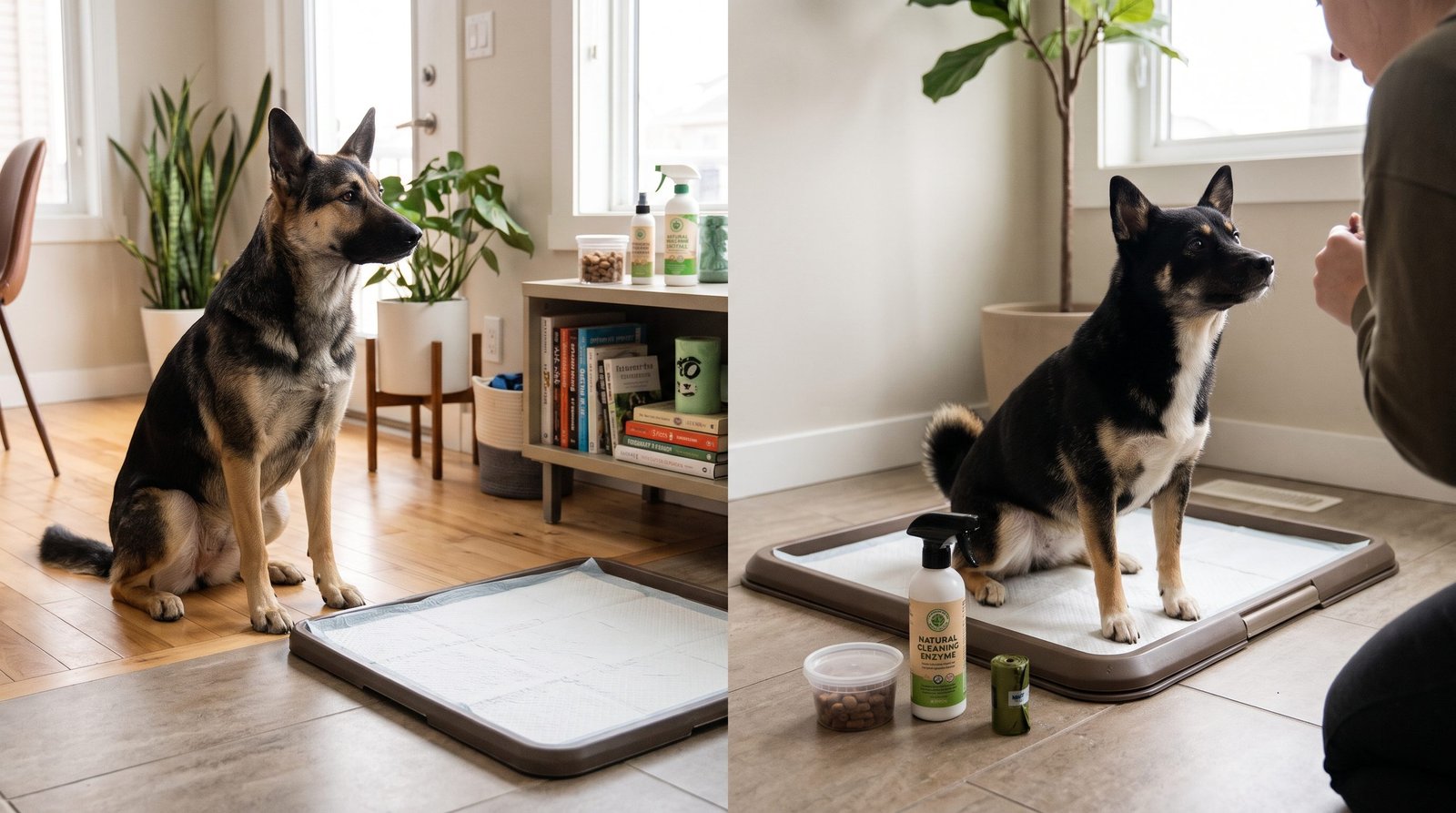
Living in an apartment or shared indoor space makes indoor potty training for dogs one of the most critical first steps for a harmonious life with your pet. Yet, many owners face frustration, wondering, “Why did they use the pad yesterday but go on the rug today?” or “Why do they keep missing the pad?”
Potty training failures usually happen when we misinterpret a dog’s natural instincts or react inconsistently. This article explores a scientific, humane, and highly effective Positive Reinforcement-Based Indoor Potty Training 4-Step Program tailored to a dog’s natural psychology.
1. How Dogs Understand Potty Spots: The Sensory Science
Dogs do not comprehend “the bathroom” as a human concept. Instead, their choices for where to relieve themselves rely entirely on instinct and sensory feedback.
Paw Touch and Substrate Preference
Dogs develop a strong preference for the texture (substrate) beneath their paws when they go. In nature, they prefer earth, grass, or sand, as well as highly absorbent natural materials indoors. Pee pads and turf mats work because of this preference. If your dog frequently urinates on carpets or blankets, they are likely confusing that soft, fibrous feel with the absorbency of a training pad.
The Power of Scent and Safe Areas
A dog’s nose dictates where it is safe to go. They seek out familiar, previously marked areas. In the early training stages, keeping a slightly soiled pad underneath a fresh one helps reinforce the “safe spot” scent. Conversely, accidents in the wrong spots must be treated with an enzymatic cleaner to entirely break down the uric acid. Using standard household detergent won’t cut it, and the lingering scent will draw them back to the exact same incorrect spot.
2. The Foolproof 4-Step Indoor Potty Training Program
Potty training is a gradual process requiring consistency. On average, it takes from two weeks to a few months. Follow these four steps patiently:
| Step | Action | Main Objective |
| Step 1: Set Up | Place multiple pads in quiet, easily accessible locations | Establish safe, dedicated “potty zones” |
| Step 2: Watch | Look for potty signals (sniffing, circling, pacing) | Guide the dog to the pad at the perfect time |
| Step 3: Reward | Give high-value treats within 3 seconds of success | Create a strong, positive association with the pad |
| Step 4: Clean | Remove all odors from mistakes using enzymatic cleaner | Erase the scent memory of accident spots |
Step 1: Establish Your “Potty Zones”
Start by placing multiple potty pads in quiet, low-traffic areas of your home. Keep them away from where your dog eats, drinks, and sleeps, as their natural den instinct prevents them from eliminating near their living spaces. Avoid busy hallways or loud household appliances (like washers or vacuums), which can cause anxiety and deter them from using the area.
Step 2: Learn and Anticipate the Golden Hours
Timings are everything. Dogs typically need to eliminate first thing in the morning, 15 to 30 minutes after eating or drinking, right after vigorous playtime, and immediately upon waking from a nap. Watch for “potty behaviors” during these times: sniffing the floor, circling, pacing, or sudden restlessness. Gently and calmly escort your dog to the designated potty pad the moment you spot these cues.
Step 3: Immediate Praise and High-Value Treats
The key to training is “positive reinforcement.” As soon as your dog finishes using the pad, shower them with enthusiastic praise (“Good job!”) and reward them with a tiny, delicious treat within 3 seconds of completion.
Training Tip: The reward must happen on the pad. Waiting until you walk back to another room to give a treat will confuse your dog about why they are being rewarded.
Step 4: Handle Mistakes Without Anger
Never scold or punish your dog for accidents. Unless you catch them in the act, disciplining them after the fact is entirely ineffective. Dogs cannot connect delayed punishment to past actions; instead, they learn to fear you, which can lead to secret soiled spots behind furniture or even behavioral issues like coprophagia (eating feces). Simply isolate your dog calmly, and clean the mess thoroughly with an enzymatic spray.
3. 3 Common Training Mistakes to Avoid
Well-intentioned owners often make mistakes that disrupt training progress. Check if you’re falling into these common traps:
- Changing Pad Types or Moving Them Frequently: Consistency is key. Changing the scent, brand, or location of the pads too often will confuse your dog. Keep things exactly the same until the habit is fully formed.
- Improper Crate or Playpen Setup: Forcing a puppy to stay in a small pen with their bed, food, and pee pad all together can go against their natural cleanliness instinct, causing stress and blending their sleeping and potty spaces. Pens should only be used carefully to expand boundaries gradually.
- Dirty or Too-Small Pads: If a pad is too small, a dog might accidentally go over the edge. Furthermore, many dogs are fastidious and will refuse to use a pad that is already soiled. Keep the area clean and choose generously sized, heavy-duty pads or washable mats.
4. Frequently Asked Questions (FAQ)
Q1. Can an adult dog (rescue or foster) be indoor potty trained?
Absolutely. Adult dogs can learn just like puppies, though it might take a bit more time if they have ingrained outdoor-only habits or past confusion. Use a larger indoor designated zone and offer incredibly high-value rewards (like tiny bits of chicken) for success.
Q2. My dog will only go outside. How do I get them to use an indoor pad?
They are likely conditioned to natural outdoor substrates (grass and dirt). To ease this transition, place a bit of outdoor soil or grass on a pad indoors, or take a soiled pad outside first to bridge the connection. Use the same verbal cue indoors (“go potty”) that you do outdoors, and be very patient.
Q3. Why does my puppy shred or play with the pee pads?
For young dogs, loose paper or fabric pads look like fun toys. To solve this, secure the pads in a weighted plastic tray with a grate, or switch to heavy-duty, reusable silicone or fabric mats that are too heavy to pick up and tear.
5. Summary: Patience and Consistency Bring Success
Potty training is not a test of intelligence; it is about building a habit. Mistakes are a natural part of the learning curve. React with neutral silence to accidents, and celebrate every single success with high-value joy. Your calm consistency will ensure a fully trained, happy companion.
Meta Description: Learn the science-backed, 4-step indoor potty training program for dogs using positive reinforcement. Discover how to set up, anticipate timing, reward successfully, and troubleshoot common housebreaking issues.