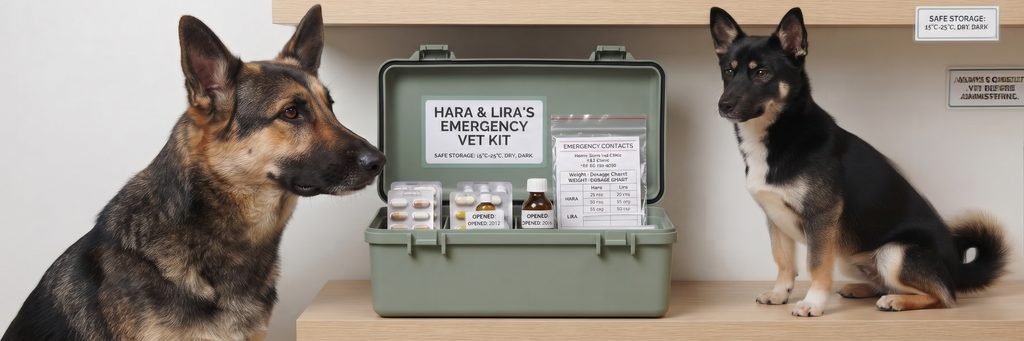
Pet emergency medication management is critical when a dog ingests a foreign object in the middle of the night or experiences a sudden allergic reaction, pet parents often fall into deep panic. Many guardians search the internet, attempting to administer human over-the-counter medications or hastily using expired emergency supplies. However, medications for pets can be a double-edged sword that can either save a life or act as a lethal poison. Especially without a proper understanding of safe storage principles and the distinct limitations of home emergency supplies, pet owners risk triggering fatal side effects rather than resolving the crisis. This article thoroughly analyzes safe management principles for home veterinary emergency drugs and the limitations required to prevent dangerous misuse.
1. Three Core Principles of Emergency Medication Storage (Temperature, Humidity, Light)
Veterinary and emergency medications undergo rapid physical and chemical alterations depending on their environment. Households living with active and curious mixed-breed dogs—such as the German Shepherd mix ‘Hara’ and the Shiba-Jindo mix ‘Lira’—must maintain rigorous control over storage locations and conditions. Medications that have lost their potency or degraded are entirely useless during an emergency.
- The Importance of Temperature and Humidity Control: Most pills and ointments should be stored at room temperature between 15°C and 25°C. Placing medications in high-humidity bathrooms or kitchen windowsills with severe temperature fluctuations is strictly prohibited. Humidity can cause powdered medications to clump or liquid syrups to degrade.
- Complete Light Protection and Safety Box Usage: Direct sunlight destroys the active components of drugs. Use opaque dedicated emergency boxes and store them in high locations out of a pet’s reach or inside locked cupboards.
- Mandatory Open-Date Tracking: Liquid ophthalmic ointments or syrups experience a sharp increase in bacterial contamination risks after opening. Developing the habit of printing open dates and discard dates with a label maker and attaching them to the exterior is essential.
| Medication Type | Recommended Storage Environment | Post-Opening Usable Shelf Life (General) | Primary Degradation Factors |
| Tablets (Pills) | Cool, dry, airtight container | Until expiration date (if moisture-proof) | Humidity, High Temperature |
| Ophthalmic Ointment / Drops | Refrigerator or room temp (varies) | Discard within 30 days of opening | Microbial contamination, Sunlight |
| Liquid Syrups | Cool, shaded room temperature | 14 to 30 days after opening | Sedimentation, Bacterial growth |
Expert Tip: The emergency box must be easily accessible in location for all family members, yet physically completely out of reach from curious pets.
2. Critical Limitations of Emergency Drug Use Commonly Made by Guardians
The mindset that “breaking a human Tylenol or anti-inflammatory pill into a tiny piece will be fine” can induce catastrophic organ damage in pets. Home emergency medications are merely temporary stopgaps with strict, clear-cut limitations.
- Differences in Interspecies Metabolic Capacity: Dogs and cats possess entirely different drug metabolic enzyme systems (such as glucuronyl transferase pathways) compared to humans. Acetaminophen (Tylenol), which is safe for humans, causes severe hepatic necrosis and red blood cell destruction in dogs even in small amounts.
- Limitations of Weight-Based Dosage Adjustments: Even within the same breed, appropriate administration dosages vary dramatically based on weight, age, and liver/kidney functions. Splitting pills by eye-test estimation is a direct highway to poisoning accidents.
- Symptom Relief Does Not Equal Treatment: Temporarily subduing pain or fever with emergency drugs does not resolve the underlying disease. Instead, it masks the root cause, counterproductively hindering accurate veterinary diagnoses.
3. Step-by-Step Emergency Response Process and Safety Rules
When an emergency occurs at home, responding systematically without panicking determines life or death. These step-by-step action guidelines are based on safety protocols mastered while caring for Hara and Lira.
- State Assessment and Safety Securing: Calm the environment to prevent the dog from becoming agitated, and visually inspect wound sites or foreign object ingestion.
- Advance Contact with Veterinary Hospitals: Rather than running blindly, call the animal emergency center before departure to convey current symptoms, weight, and suspected causes, checking patient intake capacity.
- Utilize Safety Equipment During Transport: Because pets can exhibit aggression due to pain, gently fit a muzzle if necessary, and minimize shaking using seatbelts or crates during vehicle transit.
- Transmit Medication Records: If any supplements or ointments were administered as preliminary first aid, clearly notify veterinary medical staff of the exact substance names and administration times.
Caution: Arbitrarily utilizing vomiting-induction agents (such as hydrogen peroxide) can cause esophageal burns or aspiration pneumonia; strictly follow only a veterinarian’s directions.
Frequently Asked Questions (FAQ)
Q. Can expired veterinary emergency drugs be frozen and used later? A. Absolutely not. Freezing destroys the chemical structure of active ingredients, causing a loss of drug efficacy, and moisture introduction during thawing can foster bacterial growth. Expired medications must be discarded immediately, regardless of waste.
Q. What are representative human household medicines that should never be given to dogs? A. Non-steroidal anti-inflammatory drugs (NSAIDs) such as Tylenol (acetaminophen), Advil/Brufen (ibuprofen), and aspirin cause gastrointestinal bleeding, acute renal failure, and liver failure, and must never be administered.
Conclusion: Safety Built Through Strict Storage and Professional Collaboration
Protecting a pet’s health lies not in reckless self-treatment, but in accurate knowledge-based prevention and rapid hospital integration. Safely managing emergency medications in proper environments and receiving professional veterinary care promptly during crises is the only way to live healthily and long with our beloved companions.
Meta Description: Essential for pet households! A complete summary of emergency medication storage rules (temperature, humidity, light), critical limitations of human drugs, and step-by-step emergency responses.