The pathophysiological difference between ordinary emesis and life-threatening pancreatitis lies in the premature activation of digestive zymogens inside the pancreas. Under normal physiological conditions, pancreatic acinar cells secrete digestive enzymes in inactive proenzyme states to be cleaved safely in the duodenum. However, upon exposure to abrupt lipid loads or metabolic dysregulation, these enzymes activate prematurely within the parenchymal tissue, initiating auto-digestion of the organ. This condition represents a systemic internal medical emergency capable of precipitating multi-organ dysfunction syndrome. This guide delineates the molecular mechanics of pancreatitis, establishes dry-matter fat exclusion thresholds, and details an evidence-based clinical stabilization protocol.
Phase 1: Mechanisms of Autodigestion and Molecular Perils of Lipid Overload
Canine pancreatitis is triggered when excessive lipid concentrations disrupt intracellular calcium homeostasis within pancreatic acinar cells.
Impact of Lipid Flooding on Acinar Cellular Integrity
- Premature Colocalization: High circulating triglycerides cause zymogen granules to fuse aberrantly with lysosomal hydrolases—specifically Cathepsin B—converting trypsinogen into active trypsin within the acinar cell.
- Microvascular Ischemia and Tissue Necrosis: Active trypsin initiates an enzymatic cascade that activates elastase and phospholipase A2, degrading structural vascular basements and inducing widespread parenchymal ischemia.
- Systemic Inflammatory Response Syndrome (SIRS): Massive release of inflammatory cytokines (TNF-α, IL-1, IL-6) into the portal and systemic vasculature risks triggering septic shock, acute respiratory distress, and disseminated intravascular coagulation (DIC).
Phase 2: Crude Fat Quantification and Prohibited Ingredient Screening
Without rigorous dietary lipid boundaries, subclinical low-grade inflammation can transform into a fatal necrotizing crisis following a single high-fat ingestion event.
Dietary Crude Fat Thresholds on a Dry Matter (DM) Basis
| Risk Stratification | Crude Fat Content (Dry Matter %) | Target Status & Ingredient Protocol |
| Severe Hazard (Contraindicated) | > 20% DM | Pork belly, rib fat, poultry skin, dairy butter, sausages |
| Marginal / Supervised | 12% – 18% DM | Standard adult maintenance diets, whole salmon, duck meat |
| Therapeutic Target | < 10% DM (Optimal: 7–9%) | Boiled skinless chicken breast, cod/pollock, veterinary low-fat diets |
Eradication of Incidental and Hidden Fats
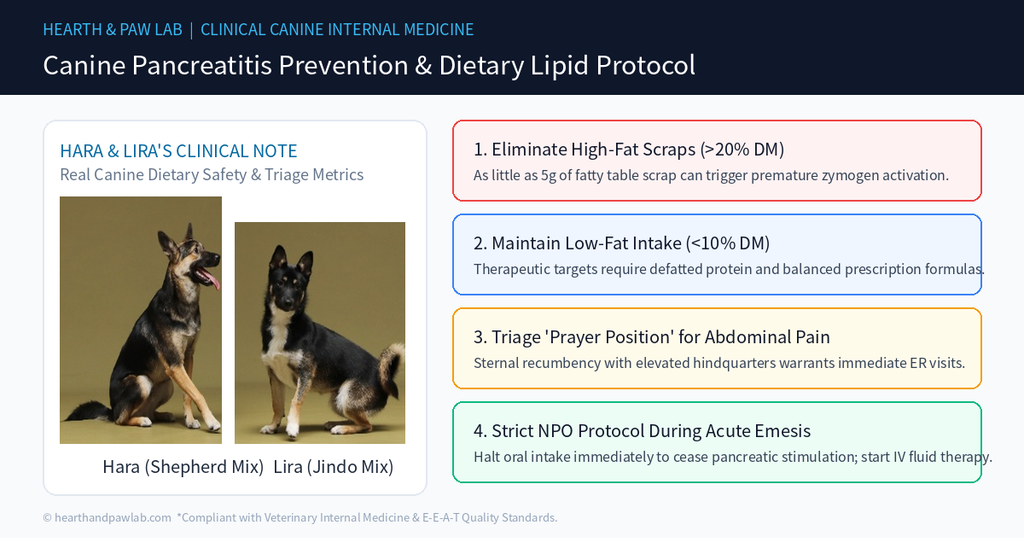
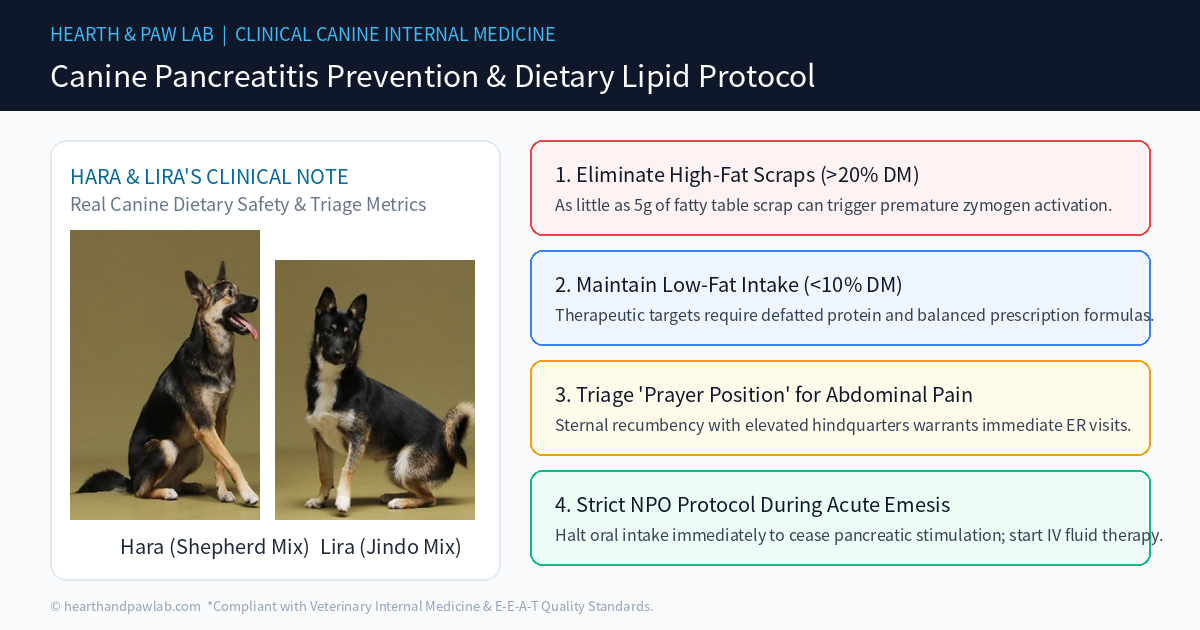
- Scrap-Feeding Elimination: Ingesting untrimmed beef trimmings or bacon rinds—even as little as 5 to 10 grams—can trigger acute supraphysiologic cholecystokinin release in small and medium dogs.
- Dairy Matrix Complications: Dairy products introduce high lipid concentrations compounded by lactose intolerance, escalating intestinal permeability and elevating endotoxin absorption.
Phase 3: Clinical Differentiation and Triage Signs
Canines instinctively conceal visceral distress; identification relies on recognizing structural postural changes and physiological parameters.
Early Symptom Assessment Checklist
Critical Diagnostic Posture: The “Prayer Position”
When a dog lowers its sternum and forepaws flat against the substrate while keeping the pelvis elevated, it is adopting the classic prayer position to decompress cranial abdominal pressure. This posture constitutes an urgent veterinary triage signal.
- Intractable Bilious Vomiting: Repeated expulsion of yellow foam or greenish bile occurring more than three times within 24 hours, independent of recent water consumption.
- Cranial Abdominal Rigidity: Tensing of the abdominal wall (guarding reflex) and vocalization or aggression when gentle palpation is applied behind the rib cage.
- Capillary Refill Prolongation: Pale, dry gingiva with a Capillary Refill Time (CRT) extending beyond 2.0 seconds, indicative of hypovolemia.
Phase 4: Hospitalization Protocols and Enteral Rehabilitation
Managing acute pancreatitis at home with self-prescribed oral medications or remedies accelerates pancreatic autodigestion.
Sequential Emergency and In-Clinic Interventions
- Initial Oral Restriction (NPO): Cease all oral intake—including water—during active vomiting to remove gastrin and secretin release triggers that stimulate pancreatic secretions.
- Quantitative Diagnostic Assay (Spec cPL / cPLI): Standard serum lipase and amylase lack sensitivity; veterinarians utilize Canine Pancreatic Lipase Immunoreactivity (cPLI) testing to confirm pancreatic-specific inflammation.
- Targeted Microvascular Resuscitation: Administer balanced isotonic crystalloid fluids (e.g., Lactated Ringer’s Solution) intravenously to restore pancreatic microcirculation and counteract metabolic acidosis.
- Early Micro-Enteral Nutrition: As soon as emesis is pharmacologically controlled (typically within 24 to 48 hours), introduce an ultra-low-fat liquid formulation via tube or voluntary intake to prevent enterocyte villous atrophy and bacterial translocation.
Conclusion: Strict Dietary Compliance Dictates Long-Term Prognosis
Surviving an acute episode of pancreatitis leaves scarred, fibrotic parenchymal tissue that heightens the probability of recurrence throughout the canine’s life. Long-term management requires absolute zero-tolerance for scrap feeding, routine monitoring of serum lipid profiles, and lifelong adherence to an ultra-low-fat diet (<10% DM). Diligent parental vigilance combined with strict dietary compliance remains the only scientifically grounded safeguard against chronic relapses.
Frequently Asked Questions (FAQ)
Q1. Can supplemental Omega-3 fatty acids be safely administered to a pancreatitis-prone dog?
A. While EPA and DHA possess potent anti-inflammatory properties, they are lipids. In the acute or unstable phase, all supplemental fats are withheld. Once full metabolic remission is attained, low-dose, high-purity marine oils may be reintroduced under veterinary calculation within the dog’s strict 10% DM daily fat ceiling.
Q2. Is an exclusive boiled chicken breast diet suitable for long-term recovery?
A. Boiled skinless chicken breast is an effective short-term transitional food, but it is deficient in calcium, essential trace minerals, and vitamins. Long-term maintenance requires a commercially formulated, nutritionally complete prescription low-fat diet.
Q3. Can pancreatitis develop without the ingestion of high-fat foods?
A. Yes. Endocrine disorders (hyperadrenocorticism, hypothyroidism, diabetes mellitus), abdominal trauma, hypercalcemia, certain pharmaceuticals (potassium bromide, systemic corticosteroids), and genetic predispositions can alter lipid processing and trigger non-dietary pancreatitis.